This Pakistan travel guide is designed to give you an honest, data-backed, and practical foundation for visiting one of South Asia‘s most misunderstood countries in 2026. Pakistan recorded nearly one million international tourist arrivals in 2023, according to UNWTO — a record year that underscored the country’s rapid emergence on the global travel map. International tourism receipts grew 76% compared to pre-pandemic 2019 levels through mid-2024, making Pakistan one of the strongest tourism recovery stories in Asia, per the UN Tourism World Tourism Barometer.
Yet this is not a simple destination. The same country that offers the Karakoram Highway, the ancient ruins of Mohenjo-daro, and some of the most staggering mountain scenery on Earth also carries a Level 3 “Reconsider Travel” advisory from the U.S. State Department. This guide does not gloss over that complexity. What follows is everything you need — visas, safety, costs, seasons, destinations, food, culture, and logistics — to decide whether Pakistan belongs on your itinerary and, if so, how to travel it well.
Pakistan sits at a crossroads. Condé Nast Traveller named it the top holiday destination for 2020, and the British Backpacker Society ranked it the world’s number-one adventure travel destination in 2018, calling it “one of the friendliest countries on earth, with mountain scenery that is beyond anyone’s wildest imagination.” Those endorsements still resonate. The country contains five peaks above 8,000 metres including K2, the world’s second-highest alongside 6 UNESCO World Heritage Sites, a food culture that rivals anywhere in Asia, and a tradition of guest hospitality (mehman nawazi) that foreign visitors consistently describe as overwhelming in its generosity.
International travel creators who have documented Pakistan extensively including Eva zu Beck (Polish-British YouTuber who lived in the country for over a year), Rosie Gabrielle (Canadian who completed an 11,000-kilometre solo motorcycle journey across Pakistan), Alex Reynolds of Lost With Purpose (visited five times and co-founded a responsible tourism organisation there), and Mark Wiens (food-focused explorations now a National Geographic YouTube Original series featuring Lahore) have shifted global perceptions significantly.
The infrastructure is improving. The e-visa system now covers 192 countries as of January 2026. Domestic airlines serve remote northern destinations like Skardu with direct flights. The Karakoram Highway continues to be upgraded through CPEC investment. The country’s travel and tourism sector contributed 5.8% of GDP in 2023, supporting roughly 4.73 million jobs, according to the World Travel & Tourism Council.
Important 2026 Update: The free Visa Prior to Arrival (VPA) programme for 126 countries was suspended on January 1, 2026. All nationalities must now apply through the standard paid e-visa system.
Pakistan’s e-visa process runs through the official portal at visa.nadra.gov.pk. You create an account, complete the application, upload your passport scan and photo, pay by credit card, and receive a Visa Grant Notice via email. Present this notice at immigration on arrival. Processing takes 7–10 business days apply at least two to four weeks before travel.
Nationality
Visa Type
Cost (approx.)
Max Stay
Notes
USA
E-Visa
$60 single / $120 multi
90 days
5-year multi-entry available
UK
E-Visa
$60 single
90 days
Apply 2–4 weeks ahead
EU / Schengen
E-Visa or ETA
$35–50
30–90 days
Some nationalities on VOA list (ETA required 48–72hrs before)
UAE, Saudi Arabia, GCC
Visa-Free
Free
30 days
Multiple entry, passport-holders only
Required documents: passport valid for 6+ months, bio-page scan, passport photo, hotel booking or invitation letter, and travel itinerary. For complete guidance by nationality, see our Pakistan Visa Guide.
4. Is Pakistan Safe for Foreign Tourists?
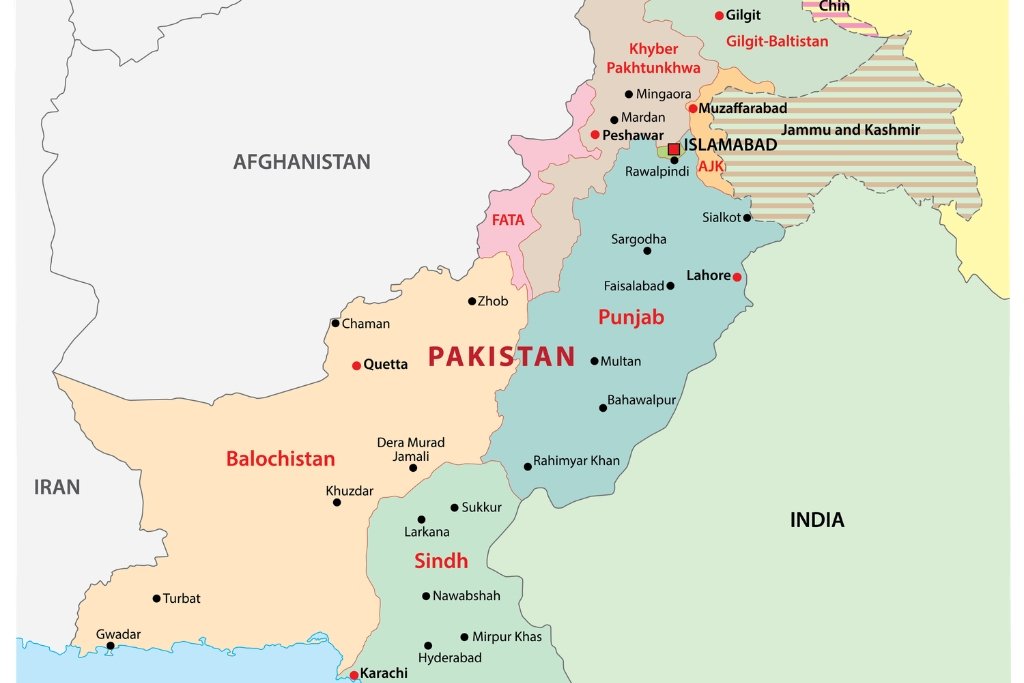
Official Advisory: The U.S. State Department rates Pakistan at Level 3 (“Reconsider Travel”). Balochistan, Khyber Pakhtunkhwa, and areas near the Line of Control carry Level 4 (“Do Not Travel”). The UK FCDO advises against all travel to similar regions including Swat district. Always check current advisories before booking.
Pakistan’s security picture is genuinely complex. Parts of the country are extremely welcoming and statistically safe for tourists; other regions carry real and serious risk. Understanding the difference is essential.
Including most of Peshawar and 21 specific KPK districts. Check FCDO list carefully.
Practical safety tips: Register with your embassy before travel. Monitor the US State Department advisory and UK FCDO advice before and during your trip. Use reputable tour operators in the north. Obtain appropriate travel insurance with medical evacuation coverage. Read our full analysis at Is Pakistan Safe?
5. Best Time to Visit Pakistan
Pakistan’s climate varies dramatically by region and altitude. The “best” time depends entirely on where you plan to go.
Check travel advisories before planning KPK trips in 2026
Cherry blossom season in Hunza typically runs from mid-March through late April, with lower Hunza flowering first. Autumn foliage peaks from mid-October through November. The Khunjerab Pass is accessible approximately May through November only. Full month-by-month breakdown at our Best Time to Visit Pakistan guide.
Hunza is, for many visitors, the reason to come to Pakistan. Sitting at roughly 2,500 metres in Gilgit-Baltistan along the ancient Silk Road, it offers a landscape of terraced orchards framed by the colossal peaks of Rakaposhi (7,788m), Ultar, and Diran. Key stops include Karimabad with its 14th-century Baltit Fort, the turquoise Attabad Lake, and the dramatic Hussaini Suspension Bridge at Passu. Hunza is also widely considered one of the safest regions in all of Pakistan. Full details: Hunza Valley Travel Guide.
Skardu
The gateway to K2 and the world’s highest concentration of extreme peaks, Skardu sits at 2,500 metres in a wide desert valley. Shangrila Resort, the Deosai Plains (one of the world’s highest plateaus at 4,114m), and Upper Kachura Lake are the headline attractions. See our Skardu Travel Guide for logistics and accommodation picks.
Lahore
Lahore, Pakistan’s cultural capital, delivers Mughal grandeur, chaotic bazaars, and the country’s best food in equal measure. The Badshahi Mosque (1673) and Lahore Fort both UNESCO World Heritage Sites — stand side by side in the Old City. Don’t miss the Wagah Border ceremony at sunset. See our Lahore Travel Guide.
Fairy Meadows
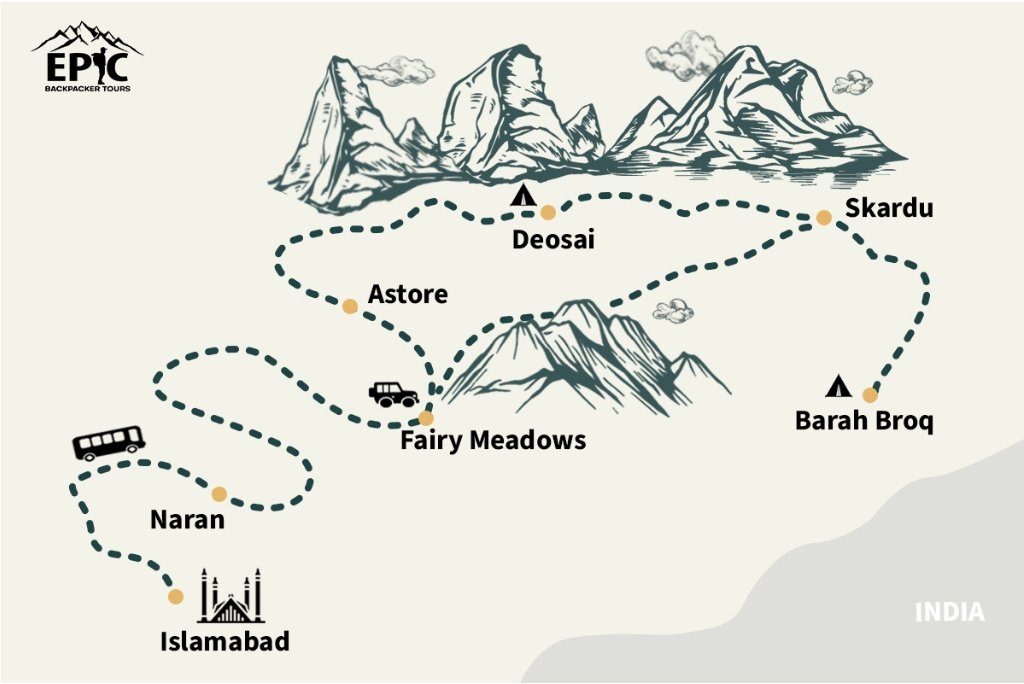
One of the world’s great camping destinations, Fairy Meadows delivers a direct, awe-inspiring view of Nanga Parbat (8,126m) from a high alpine meadow at 3,300 metres. Getting there involves a nerve-testing 4×4 jeep ride followed by a two-hour hike through pine forest. Facilities are basic. Full logistics in our Fairy Meadows Guide.
Islamabad
Pakistan’s purpose-built capital offers green space, mountain proximity, and a more ordered pace. Faisal Mosque anchors the city against the Margalla Hills. The ancient ruins of Taxila (UNESCO) lie less than an hour away.
Mohenjo-daro
This UNESCO World Heritage Site in Sindh preserves one of humanity’s earliest urban centres a major city of the Indus Valley Civilisation built around 2500 BCE. Best visited November through February to avoid extreme heat. See our Mohenjo-daro Guide.
Neelum Valley, Azad Kashmir
This 144-kilometre valley of forests, rivers, and alpine lakes including Ratti Gali Lake at 3,700m — is among Pakistan’s most beautiful and least visited landscapes. Foreign tourists may require special permits. See our Neelum Valley Guide.
7. How Much Does a Trip to Pakistan Cost?
Pakistan remains one of Asia’s most affordable destinations. Figures below reflect 2025–2026 market rates at approximately 280 PKR to 1 USD.
Category
Budget Traveller
Mid-Range Traveller
Luxury Traveller
Daily total (per person)
$15–30 / PKR 4,000–8,500
$30–55 / PKR 8,500–15,000
$90–215+ / PKR 25,000–60,000+
Accommodation
$5–11/night (hostels, guesthouses)
$29–54/night (3-star hotels)
$107–357+/night (Serena, Pearl Continental)
Meals
$2–5/day (street food, local restaurants)
$7–15/day (restaurants, cafés)
$25–60+/day (fine dining, hotel restaurants)
Transport
Local buses, shared 4x4s
Mix of buses and domestic flights
Private car and driver, domestic flights
Street food is extraordinarily cheap: biryani PKR 300–500 ($1–1.80), nihari PKR 200–400, chai PKR 30–80. A domestic flight from Islamabad to Skardu costs PKR 12,000–44,000 ($43–157) one way. Guided northern Pakistan tours range from ~$200 for budget group packages (5 days) to $1,000–2,500+ for premium all-inclusive itineraries (10–14 days). Full breakdown at our Pakistan Travel Cost Guide.
Key carriers serving Pakistan: Emirates (via Dubai), Qatar Airways (via Doha), Turkish Airlines (via Istanbul), Etihad (via Abu Dhabi), Saudi Airlines, flydubai, Air Arabia, and PIA (which has resumed routes to Paris and Manchester). Over 37 international airlines serve Pakistan in total.
9. Getting Around Pakistan
Domestic Flights
PIA, Airblue, and Fly Jinnah connect major cities. The Islamabad–Skardu route (~1 hour) transforms a 20+ hour road journey into a spectacular 60-minute flight over Karakoram peaks. Important caveat: northern flights are notoriously weather-dependent. Always build buffer days into your itinerary.
The Karakoram Highway (KKH)
All 1,300 kilometres of the KKH remain one of the world’s great road journeys, connecting Islamabad to the Chinese border at Khunjerab Pass (4,693m). Key stops northward: Abbottabad, Chilas, Gilgit, Karimabad (Hunza), Passu, and Sust. The full Islamabad–Hunza drive takes 16–18 hours. NATCO government buses run from Rawalpindi to Gilgit for PKR 2,100–2,500 ($7.50–9). See our guide to Northern Pakistan trips for detailed road logistics.
Intercity Buses
Daewoo Express and Faisal Movers run air-conditioned services on Punjab routes. Lahore to Islamabad: ~4.5 hours, PKR 2,500–3,200. Sleeper buses cover the 16-hour Lahore–Karachi route.
Within Cities
Careem (which absorbed Uber’s Pakistan operations) operates in 10 cities including Islamabad, Lahore, and Karachi. A 20-minute Careem ride costs PKR 400–600 (~$1.50–2.15). Lahore also has an Orange Line metro. Auto-rickshaws are ubiquitous; negotiate fares beforehand. In the northern mountains, private 4×4 jeep hire is essential for destinations like Fairy Meadows (PKR 8,000–15,000/day).
10. What to Eat in Pakistan
If you come to Pakistan for one reason, make it the food. This is a country where cuisine is identity, where regional rivalries play out on the plate, and where a street-side karahi at midnight is a national pastime.
Meat-filled pastry from the northern mountains; warming and hearty
11. Pakistani Culture & Etiquette for Visitors
Dress Code
For women: cover legs and arms loose trousers, long sleeves, and a dupatta (scarf) for mosques and conservative areas. A shalwar kameez (local dress) is ideal. In Islamabad, Lahore, and Karachi, jeans and modest tops are fine in casual settings. For men: long trousers and a shirt are standard; avoid shorts in public.
Photography Etiquette
Always ask before photographing people, especially women many will decline and pressing the point is disrespectful. Photography of military installations, border areas, and security checkpoints is strictly prohibited. Tourist areas in Hunza and Skardu tend to be relaxed about cameras.
Social Customs
Hospitality (mehman nawazi) is paramount. Expect tea invitations from strangers this is genuine warmth. Greet with Assalamu Alaikum. Men should not initiate physical contact with unfamiliar women. Use your right hand for eating, greetings, and passing items. Remove shoes before entering homes and mosques.
Ramadan 2026
Ramadan 2026 began mid-February and runs through approximately mid-March. Most restaurants close during daylight hours. Avoid eating, drinking, or smoking in public before sunset. Evenings come alive with iftar feasts joining a community iftar is one of the finest cultural experiences Pakistan offers.
Alcohol & Dietary
Alcohol is prohibited under Pakistani law and not publicly available. Some international hotels may serve non-Muslim foreign guests in private. Pork is unavailable; all food is halal.
12. Practical Travel Tips
SIM Cards & Internet
Visit an official franchise store (not a street kiosk) with your passport and valid visa for mandatory biometric registration. Jazz offers the best overall coverage a 15 GB data package costs approximately PKR 1,000 ($3.60) for 30 days. Zong provides the fastest 4G speeds. Telenor is cheapest. In remote northern areas (Fairy Meadows, Deosai, high passes), expect no signal. SCOM is the only carrier with coverage in some parts of GB.
Money & ATMs
Pakistan is primarily a cash economy. Credit cards work at major hotels and upscale restaurants in cities, but the entire northern region operates on cash only. HBL (Habib Bank, Visa) and Standard Chartered are the most reliable for international ATM withdrawals withdrawal limits typically cap at PKR 50,000 (~$179) per transaction. Stock up on cash in Islamabad before heading north. Bring USD as backup.
Health & Vaccinations
Recommended vaccinations: Hepatitis A, Typhoid, Hepatitis B, and Rabies (for adventure travel). Pakistan remains one of two countries where polio is endemic — an oral polio vaccine may be required. Malaria prophylaxis may be advisable for lowland areas. Medical facilities in Islamabad, Lahore, and Karachi are adequate; in remote northern areas they are virtually non-existent. Ensure your travel insurance covers medical evacuation.
Altitude Sickness in the North
Hunza sits at 2,500m, Fairy Meadows at 3,300m, Deosai Plateau at 4,100m, Khunjerab Pass at 4,693m. Spend at least a day acclimatising below 3,000m before ascending further. Do not increase sleeping altitude by more than 500m per day above 3,000m. Symptoms headache, nausea, dizziness should trigger an immediate halt or descent.
Packing Essentials for the North
Layers are non-negotiable: a good down jacket, waterproof shell, sturdy hiking boots, sunscreen (UV is intense at altitude), sunglasses, headlamp, first-aid kit, water purification tablets, power bank, and any prescription medications. Universal power adapter covers both Type C and Type D sockets.
13. Pakistan Sample Itineraries
3-Day Lahore Cultural Immersion
Day 1: Badshahi Mosque and Lahore Fort (UNESCO), lunch in the Walled City, afternoon at Shalimar Gardens, evening on Food Street. Day 2: Lahore Museum, Anarkali Bazaar, Wazir Khan Mosque, high tea at Haveli restaurant with Old City views. Day 3: Day trip to Wagah Border for the sunset flag-lowering ceremony; stop at Minar-e-Pakistan en route.
7-Day Northern Highlights
Days 1–2: Fly Islamabad to Skardu. Explore Shangrila Resort, Upper Kachura Lake, and Skardu Fort. Day 3: Full-day excursion to Deosai Plains (July–September only). Day 4: Drive Skardu to Hunza via Gilgit or fly to Gilgit and transfer. Days 5–6: Karimabad — Baltit Fort, Altit Fort, Eagle’s Nest viewpoint at sunrise, Attabad Lake boat trip, Hussaini Bridge at Passu. Day 7: Return via KKH or fly Gilgit to Islamabad.
14-Day Grand Pakistan Circuit
Days 1–3:Lahore — Mughal heritage, food culture, Wagah. Day 4: Train or fly to Islamabad; afternoon at Faisal Mosque and Margalla Hills. Day 5: Day trip to Taxila (UNESCO). Days 6–7: Fly to Skardu; explore lakes and Deosai. Days 8–10: Overland to Hunza; full exploration of Karimabad, Passu, and Attabad Lake. Day 11: Drive to Fairy Meadows or begin return south along KKH. Day 12: Fly Gilgit to Islamabad. Day 13: Fly to Karachi; coastal city exploration and seafood dinner. Day 14: Morning at Mohatta Palace Museum; depart.
14. FAQ
Do I need a visa to visit Pakistan?
Most nationalities require a visa. GCC citizens (UAE, Saudi Arabia, Qatar, Kuwait, Bahrain, Oman) enter visa-free for 30 days. All others including US, UK, and EU citizens must apply for an e-visa through visa.nadra.gov.pk. Processing takes 7–10 business days. Costs range from $35 to $120 depending on nationality. The previously available free VPA programme was suspended on January 1, 2026.
Is Pakistan safe for American and European tourists?
For trekking and general sightseeing: June through September. For cherry and apricot blossoms: mid-March to late April. For autumn foliage: mid-October to mid-November. Winter (December–March) closes most mountain passes and roads.
How much money do I need per day in Pakistan?
Budget travellers can manage on $15–30 per day. Mid-range travellers should budget $30–55 per day. Luxury travellers using 5-star properties will spend $90–215+ per day. Guided northern tours cost $200–2,500+ depending on duration and comfort level.
Can I use credit cards and ATMs in Pakistan?
Pakistan is predominantly cash-based. Credit cards are accepted at major hotels and upscale establishments in cities, but most transactions require cash. HBL and Standard Chartered ATMs are most reliable for international cards. Withdraw sufficient cash in Islamabad or Lahore before heading to northern regions.
What vaccinations do I need for Pakistan?
Health authorities strongly recommend Hepatitis A, Typhoid, Hepatitis B, and Rabies (for adventure travellers). A polio vaccination may be required. Malaria prophylaxis should be discussed with your travel doctor if visiting lowland areas. Consult a travel health clinic at least six weeks before departure.
Do I need a guide or can I travel Pakistan independently?
Both are viable. Independent travel works well in cities and is increasingly common in Hunza and Skardu. For remote destinations like Fairy Meadows, Deosai, and high-altitude treks, a local guide or tour operator is strongly recommended. Some areas require NOCs (No Objection Certificates), which operators can arrange.
Final Word
Pakistan is not a destination you visit on autopilot. It demands preparation, flexibility, and a willingness to engage with complexity. What it gives back is extraordinary: mountain landscapes that rival anywhere on Earth, a culinary tradition of staggering depth, archaeological sites spanning five millennia, and a culture of hospitality that will redefine your understanding of the word.
The country’s tourism trajectory is unmistakable rising visitor numbers, growing international recognition, expanding infrastructure even as security challenges persist in certain provinces. Coming prepared, staying informed, and travelling responsibly are the foundations of a successful Pakistan trip in 2026.
Explore detailed regional guides to plan your Pakistan journey with confidence.