
Image Source:https://boundlessadventure.com
Table of Contents
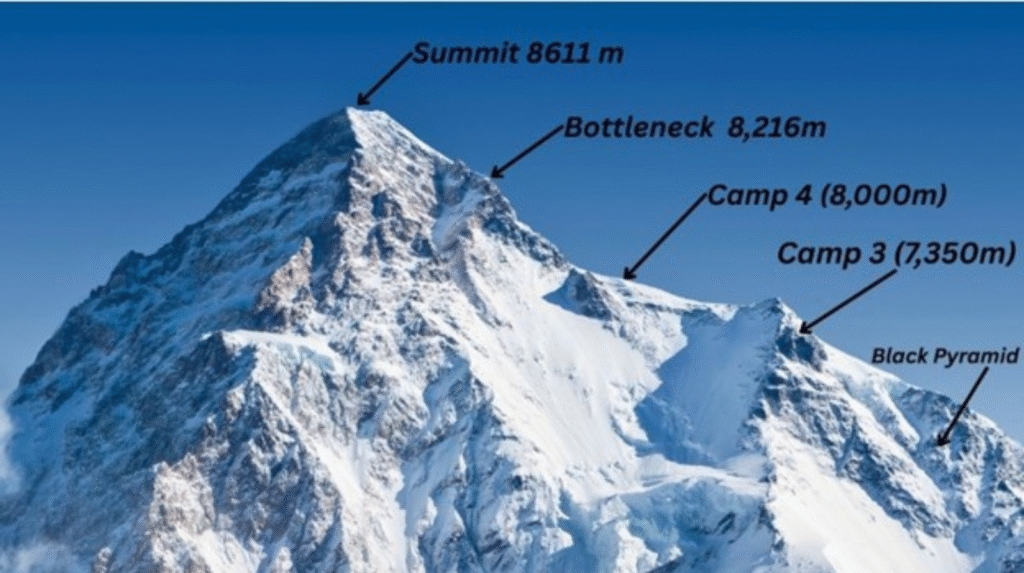
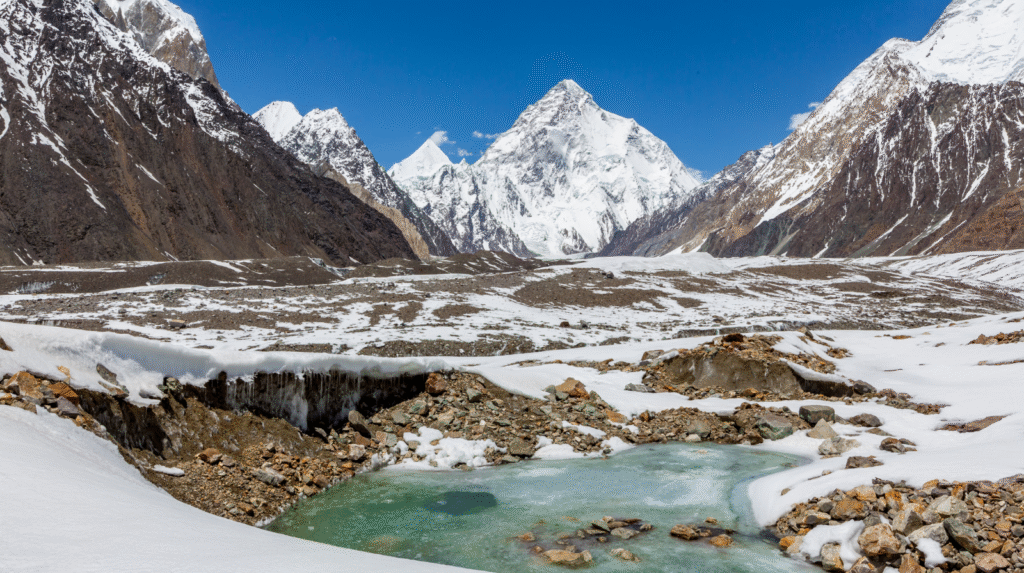
The most common thing trekkers say when they first see K2 from Concordia: nothing. The mountain is so large, so disproportionate to every image you’ve prepared yourself with, that language temporarily fails. You’re standing at 15,360 feet on the Baltoro Glacier the world’s longest non-polar glacier surrounded by four of the world’s fourteen 8,000-meter peaks. K2 rises directly ahead: 28,251 feet of almost vertical granite and ice, the second-highest mountain on Earth and by most accounts the most technically demanding.
That moment is what you’re trekking 100 miles to reach. Getting there takes 14 days, a pack that will feel heavier than you expected, and a level of physical preparation that most people skip and pay for on day eight. What follows covers everything you actually need to know: the route, the costs in real dollars, the gear that matters, how to find an operator worth trusting, and what the Baltoro will ask of you before it shows you what it has.
Pakistan’s Karakoram Range holds five of the world’s fourteen peaks above 8,000 meters. The country’s Gilgit-Baltistan province gateway to the K2 trek — received a record number of international trekkers in 2024, and the 2026 season is projected to be busier still. Book early. Prepare properly. Then go.
K2 Base Camp Trek At a Glance
| Detail | Information |
|---|---|
| Trek Name | K2 Base Camp (Concordia) |
| Distance | ~100 miles (160 km) round trip |
| Duration | 14–16 days (trekking) + 2–3 days travel each side |
| Max Altitude | 14,764 ft / 4,500 m (Concordia) |
| Difficulty | Strenuous significant prior trek experience required |
| Best Season | June 15 August 15, 2026 |
| Permit Required | Yes Environmental Fee (CKNP): ~$150 USD per person |
| Cost Range | $1,800 – $2,600 USD (group tour, all-inclusive from Skardu) |
| Nearest Airport | Skardu Airport (SKT) direct flights from Islamabad |
| Key Gateway Town | Askole last village before the glacier |
| Guide Required | Yes certified mountain guide mandatory |
| Book In Advance | 3–6 months minimum for peak season (July) slots |
K2 Base Camp vs. Everest Base Camp: Why This Trek Is Different
A lot of American trekkers start thinking about K2 Base Camp after completing Everest Base Camp —or at least pricing it. The two are worth comparing directly, because they are very different trips and the difference matters for how you prepare.
| Factor | K2 Base Camp | Everest Base Camp |
|---|---|---|
| Base camp altitude | 14,764 ft / 4,500 m (Concordia) | 17,598 ft / 5,364 m |
| Trek length (round trip) | ~100 miles / 14–16 days | ~80 miles / 12–14 days |
| Glacier trekking | Extensive Baltoro Glacier (39 miles) | Minimal Khumbu icefall above BC |
| Crowd level (peak season) | Low hundreds per season | High thousands per season |
| Infrastructure on route | Minimal wilderness camping | Established teahouses |
| Permit complexity | Moderate CKNP permit + guide required | Moderate TIMS + NP permit |
| Cost (all-in, USD) | $3,400 – $6,200 from USA | $4,000 – $8,000 from USA |
| Physical difficulty | Higher glacier terrain + altitude | Moderate well-maintained trails |
| Best for | Serious trekkers seeking raw wilderness | First-time high-altitude trekkers |
The thing that separates the two treks isn’t altitude — Everest BC is actually higher. It’s the glacier. You will walk directly on the Baltoro for multiple days, not around it or past it. That changes the physical demands, the gear you need, and the experience entirely. Nepal has teahouses and established trails. The Baltoro has none of that.
The 2026 Trekking Season: When to Go and How to Book
The Baltoro opens for roughly eight weeks a year June 15 through August 15. Miss that window and you’re either hiking through snow or waiting for monsoon floods to clear the roads into Askole. There’s no flexibility here; the mountain doesn’t negotiate on seasons.
| Window | Conditions | Notes |
|---|---|---|
| Before June 15 | Closed snow | Approach roads from Askole blocked |
| June 15 July 15 | Opening season | Good availability, less crowded, weather can be unsettled |
| July 15 August 1 | Peak season | Best weather window, highest operator activity — book 4–6 months ahead |
| August 1 August 15 | Late season | Weather starts to deteriorate, fewer permits available |
| After August 15 | Closed monsoon risk | Flooding on approach roads, unstable glacier conditions |
For peak-season departures (July 15 – August 1, 2026), operators typically open registration in October–November 2025. If you’re reading this in early 2026, late June departures may still have availability. Contact operators directly don’t assume a slot exists without confirming. TrulyPakistan’s directory lists verified operators with 2026 season availability.
How Fit Do You Need to Be? Training for K2 Base Camp
The Baltoro will punish you in one specific way: it keeps going. Not one hard day fourteen of them, carrying 20+ lbs, at elevations where your body is working harder than you realize. The trekkers who struggle are almost always the ones who trained their lungs and ignored their legs. Cardiovascular fitness matters. Leg strength matters more.
Minimum Fitness Benchmarks
You should be able to do the following before you book: complete a 3–4 day trek at altitude above 10,000 ft without significant distress; carry a 20 lb pack for 8 hours on consecutive days; hike 12–15 miles on mixed terrain without knee or ankle problems; and complete a 6-month consistent training program of running, hiking, or cycling.
Recommended 6-Month Training Structure
| Phase | Months | Training Focus |
|---|---|---|
| Foundation | Months 1–2 | Daily 45-min cardio (run/cycle/swim). 2x weekly hikes with pack. Build to 8–10 mile day hikes. |
| Build | Months 3–4 | Increase pack weight to 20 lbs. Add elevation. 1 multi-day overnight hike per month. 3x weekly cardio. |
| Simulate | Month 5 | Back-to-back long hike days (Sat + Sun). One 3-day trek. Focus on descents — knees are the weak point. |
| Taper | Month 6 | Reduce intensity. Maintain weekly hikes. Confirm gear. Get a pre-trip medical check. |
If you’ve never trekked at altitude above 12,000 ft, consider completing the Nanga Parbat Base Camp trek (8 days, max 13,100 ft) or the Fairy Meadows trek in Pakistan as a stepping stone. Both are spectacular and significantly easier — they’ll tell you whether you’re ready for the Baltoro before you commit.
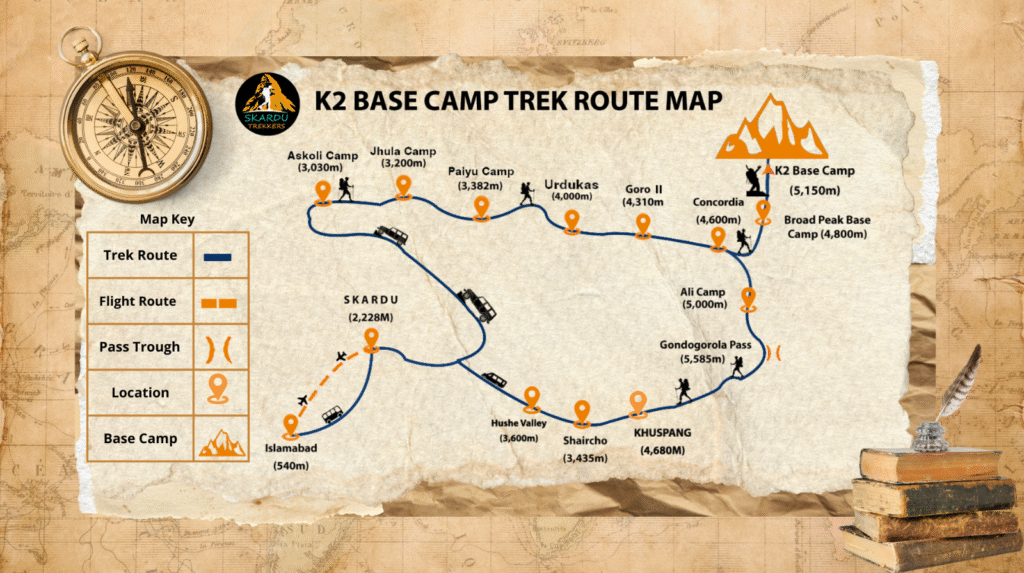
The Route: From Skardu to Concordia
The trek doesn’t start in Islamabad. It starts in Skardu a mountain town you reach either by a 45-minute flight from Islamabad, or a 20-hour drive up the Karakoram Highway if you want to ease in slowly. From Skardu, a jeep bounces you along a rough track for about 8 hours to Askole, the last village before the glacier. After Askole, the road ends and doesn’t reappear for two weeks.
Every licensed operator runs roughly the same route — 14 days is the baseline that fits the terrain, not a marketing number. Some groups take 16 days with extra acclimatization built in. If your fitness is solid, 14 is fine.
| Day | Stage | What Happens |
|---|---|---|
| Day 1–2 | Islamabad → Skardu | Fly or drive the Karakoram Highway. Rest day in Skardu. |
| Day 3 | Skardu → Askole (3,049 m) | 4WD jeep drive (~8 hrs). Last village. Meet your cook and porter team. |
| Day 4 | Askole → Jhola (3,200 m) | Trek begins. Cross the Braldo River suspension bridge. Camp by the river. |
| Day 5 | Jhola → Paju (3,429 m) | First views of Trango Towers. Cross moraine. Paju campsite is stunning. |
| Day 6 | Rest day at Paju | Acclimatization. Short hike up moraine ridge. First views of K2 visible. |
| Day 7 | Paju → Urdukas (4,050 m) | Crossing the Baltoro Glacier begins. Views of Cathedral Towers and Lobsang Spire. |
| Day 8 | Urdukas → Gore II (4,200 m) | Full glacier day. Crampon sections. Views expanding across the Karakoram. |
| Day 9 | Gore II → Concordia (4,691 m) | The culmination. Arrival at Concordia — the ‘Throne Room of the Mountain Gods.’ |
| Day 10 | Rest/Explore at Concordia | Side trip to K2 Base Camp (5,150 m). Optional. Full K2 and Broad Peak views. |
| Day 11 | Concordia → Urdukas | Return journey begins. Reverse route on glacier. |
| Day 12 | Urdukas → Paju | Faster return — terrain is now familiar. |
| Day 13 | Paju → Askole | Final full trekking day. Celebratory dinner with your team. |
| Day 14 | Askole → Skardu | Jeep transfer. Hot shower. Rest. |
| Day 15–16 | Skardu → Islamabad | Fly back or KKH drive. Trek complete. |
Concordia and K2 Base Camp are often confused. Concordia (14,764 ft) is the dramatic meeting point of the Baltoro and Godwin-Austen Glaciers, where K2, Broad Peak, and the Gasherbrum range all come into simultaneous view. K2 Base Camp itself sits at 16,900 ft / 5,150 m an additional half-day hike from Concordia. Most itineraries include Concordia as the primary destination, with K2 BC as an optional extension day. Be clear with your operator about which objective you’re paying for.
Gear List: What to Pack and What to Leave Behind
There are no shops on the Baltoro. No drop points, no warm huts, no place to buy a replacement sleeping bag if yours turns out to be the wrong rating. What you carry is what you have.
| Item | Priority | Why It Matters |
|---|---|---|
| Trekking boots (high-cut, broken in) | Safety-critical | Non-negotiable. Blisters on day 2 end treks. |
| Crampons (10-point minimum) | Safety-critical | Glacier crossing. Rent in Skardu if not owned. |
| Trekking poles (2) | Essential | Mandatory on glacier. Reduces knee stress 30%. |
| Down jacket (rated to -10°C/14°F) | Safety-critical | Concordia nights drop well below freezing. |
| Waterproof shell jacket + pants | Essential | Afternoon rain is common. Gore-Tex recommended. |
| Base layers (merino wool, 2–3 sets) | Essential | Moisture management. Synthetics acceptable. |
| Sleeping bag (-15°C/5°F rated) | Safety-critical | Camp tents are not heated. Do not bring a 3-season bag. |
| Sleeping pad (insulated, R-value 4+) | Essential | Ground insulation matters as much as the bag. |
| Sunscreen SPF 50+ (x3 bottles) | Safety-critical | Glacial UV is extreme. Reapply every 2 hours. |
| Glacier glasses (CE4/UV400) | Safety-critical | Snow blindness is real and painful. Not sunglasses. |
| Diamox (acetazolamide) | Strongly advised | Altitude sickness prevention. Consult your doctor. |
| Water purification (tabs or filter) | Essential | All glacier water must be treated. |
| Headlamp + spare batteries | Essential | Early starts at 4 AM are standard. |
| Portable battery pack (20,000 mAh) | Useful | No charging on trail. GPS and camera battery management. |
| Heavy camera gear | Leave behind | Weight is your enemy. Phone camera at this altitude is sufficient. |
| Cotton clothing | Leave behind | Cotton kills in cold and wet. No exceptions. |
Skardu’s main bazaar has a decent gear market where you can rent crampons, trekking poles, sleeping bags, and down jackets. If you’re flying international with tight baggage allowances, rent the heavy things in Skardu and only bring what you truly can’t substitute.
Choosing Your Operator: What to Ask Before You Book
You cannot trek the Baltoro alone. A licensed Pakistani guide from a registered agency is required for every foreign national on this route not a recommendation, an actual permit condition. That’s not a bad thing. A good guide is the difference between a miserable experience and a remarkable one. A bad operator is the difference between a safe trek and a dangerous one.
Six Questions to Ask Every Operator
1. Are your guides certified by the Pakistan Alpine Club or a recognized mountaineering body?
2. Does your group carry a satellite phone? (Walk away from operators who say no.)
3. What is your porter welfare policy wages per stage, load limits, equipment provision?
4. What is your maximum group size on this departure?
5. Does the permit cost, CKNP fee, and porter wages come included in your stated price?
6. What is your helicopter evacuation protocol, and do you require proof of travel insurance?
Three Red Flags to Watch For
No satellite phone on route non-negotiable safety failure.
Porters carrying loads above 25 kg (55 lbs) — exploitative and indicative of poor operator ethics.
Price below $1,500 for a full package — cost-cutting almost always means cutting safety.
TrulyPakistan’s verified operator directory lists trekking operators with current season availability, client reviews, and direct booking. Operators listed have confirmed guide certifications and porter welfare standards.
How Much Does the K2 Base Camp Trek Cost? (USD, 2026)
A K2 Base Camp trek from the United States will cost you somewhere between $3,400 and $6,200 all-in, depending mainly on which operator you choose, what gear you already own, and when you book your flights. Here’s where the money actually goes.
| Expense | Cost (USD) | Notes |
|---|---|---|
| Group tour package (14 days, Skardu–Skardu) | $1,800 – $2,600 | Includes guide, cook, porters, food, camp gear, tent |
| Private/custom tour | $2,800 – $4,500 | Solo or 2-person with dedicated guide team |
| CKNP environmental permit | ~$150 | Mandatory. Paid by operator — confirm inclusion |
| International flights to Islamabad | $800 – $1,400 | Book 3–4 months out for best fares |
| Islamabad → Skardu flight | $80 – $130 | Book early — seats fill for trekking season |
| Travel insurance (with heli evacuation) | $200 – $400 | Non-negotiable for glacier trekking |
| Gear purchase/rental | $200 – $800 | Crampons, sleeping bag, poles rentable in Skardu |
| Tips for porter/cook team | $100 – $200 | Porters earn ~$4/stage — tip 10% minimum |
| Total estimated trip cost (USA origin) | $3,400 – $6,200 | Realistic range for a well-prepared first-timer |
The biggest variable you control is international flights. Booking 3–4 months ahead and flying into Islamabad (ISB) via a Gulf carrier (Emirates, Qatar, Etihad) typically saves $200–$400 compared to booking late. Skardu flights book out months ahead during trekking season book yours the same day you confirm your ground package.
Altitude, Safety, and What to Do If Something Goes Wrong
Most people who trek the Baltoro experience some altitude sickness. A headache at Concordia is not a medical emergency it’s your body telling you it’s working hard. The protocol is the same one climbers have used for decades: rest, drink water, don’t go higher until you feel better. The problems happen when people ignore the early signs.
The AMS Warning Signs You Must Know
Persistent headache that does not resolve with hydration and rest.
Nausea or vomiting.
Extreme fatigue disproportionate to effort.
Loss of coordination or confusion — this is High Altitude Cerebral Edema (HACE) and requires immediate descent.
Breathlessness at rest or coughing up pink/frothy fluid — this is High Altitude Pulmonary Edema (HAPE) and is life-threatening.
Never ascend to the next campsite if a member of your group has unresolved AMS symptoms. The golden rule: if in doubt, descend. Concordia has helicopter landing capacity for evacuations your operator knows the protocol and your insurance policy covers the cost if you booked correctly.
Gilgit-Baltistan the province where K2 sits — has no Level 4 travel advisory from the US State Department. Thousands of Western trekkers do the Baltoro every season without incident. For the full picture on Pakistan’s advisory situation, read TrulyPakistan’s Is Pakistan Safe for American Tourists guide.
Permits and Paperwork: What You Need Before You Go
CKNP Environmental Fee: ~$150 USD per person. Mandatory for all foreign nationals on the Baltoro.
Licensed guide: Your operator assigns a certified guide. No permit is issued without one on file.
Pakistan Tourist Visa: Required for all US citizens. Apply online at visa.nadra.gov.pk. See TrulyPakistan’s Pakistan Visa Guide for US Citizens for the full step-by-step process.
Travel insurance with helicopter evacuation: Not a government requirement but treated as mandatory by all reputable operators. Non-negotiable.
Frequently Asked Questions
Do I need previous trekking experience?
Yes. The Baltoro Glacier crossing requires confidence on uneven terrain, strong physical fitness, and comfort with long days (6–9 hours). Trekkers without prior multi-day experience should complete at least two 5–7 day treks at altitude before attempting K2 Base Camp.
Is K2 Base Camp accessible to solo travelers?
Yes solo trekkers join group departures through licensed operators. Solo, self-guided trekking is not permitted. A certified guide and porter team are mandatory for all foreign nationals on the Baltoro.
What happens if I get altitude sickness?
Acclimatization days are built into the itinerary. Symptoms of AMS (headache, nausea, fatigue) are common and usually manageable with rest and hydration. Your guide carries a pulse oximeter. In serious cases, helicopter evacuation from Concordia to Skardu is possible — this is why travel insurance with heli evacuation cover is non-negotiable.
How is the food on the trek?
Better than you’d expect. Camp cooks prepare three hot meals daily typically dal, rice, chapati, eggs, pasta, and soup. Most operators can accommodate dietary restrictions with advance notice. You’ll need roughly 4,000–5,000 calories per day at altitude.
Is a Pakistan visa difficult for Americans to get?
No. As of 2026, Americans apply for a paid Tourist eVisa online at visa.nadra.gov.pk. The VPA free visa programme was suspended effective January 1, 2026 all US citizens now apply through the standard paid portal. Processing typically takes 5–7 business days. See TrulyPakistan’s full Pakistan Visa Guide for US Citizens for step-by-step instructions.
Can I do the trek independently without a guide?
No. Chitral and Karakoram National Park regulations require foreign nationals to trek with a licensed Pakistani guide on the Baltoro route. Independent trekking without a guide is illegal and dangerous on the glacier. Your operator handles all permits and guide assignments.
Is Pakistan safe for American trekkers?
Gilgit-Baltistan the province where K2 is located — has one of the strongest safety records for international trekkers in Pakistan. The region carries no Level 4 travel advisory. Thousands of Western trekkers visit annually. For the full safety picture, read TrulyPakistan’s Is Pakistan Safe for American Tourists guide.
Ready to Plan Your K2 Base Camp Trek?
The Baltoro Glacier does not rush. It has existed for longer than any record of human travel across it, and it will exist long after your boots leave the moraine for the last time. What it asks of every trekker is the same thing: preparation, respect, and the willingness to show up physically and mentally ready for one of the most serious mountain environments on Earth.
If you do that if you prepare properly, choose a responsible operator, and give yourself the full 14 days the route deserves what you will find at Concordia will justify every training run, every expensive piece of gear, and every hour of planning. Start planning your K2 Base Camp trek with TrulyPakistan’s verified operator directory.
3 thoughts on “K2 Base Camp Trek:”