
The October the Valley Went Gold:
Setting: Hunza Valley, Gilgit-Baltistan, Pakistan · Time of Travel: October · Audience: American & International First-Time Visitors · Word Count: ~3,800
Table of Contents
- 1Day One — The Road That Prepares You
- 7Attabad Lake: The Accidental Wonder
- 2A Kingdom 900 Years in the Making
- 8What Development Actually Looks Like
- 3Baltit Fort: A Castle That Remembers
- 9The Evening at Eagle’s Nest
- 4The People and the Culture
- 10Before You Go
- 5Arts, Crafts & Music
- 11The Last Morning
- 6The Food: Apricot Oil & Glacial Flour
- 12Sources & References
Day One — The Road That Prepares You
The drive into Hunza does something to you before you arrive. Somewhere around the fourth hour on the Karakoram Highway — after the gorges have narrowed to the width of a corridor and the river far below has turned the color of pewter — you stop trying to take photographs. The landscape has crossed a threshold where documentation feels beside the point. You just watch.
I had flown into Gilgit from Islamabad on a forty-five-minute PIA flight where the plane barely reaches cruising altitude before beginning its descent through a crease in the mountains. The window seat on the left side is, pilots will tell you, the side to sit on. Seven peaks over 23,000 feet visible in a single glance — Nanga Parbat filling the frame like a white wall, so close you feel you could lean out and touch it. From Gilgit, a hired car north: two and a half hours along the KKH to Karimabad.
I arrived in the second week of October. Everyone who knows Hunza told me this was the right time. The summer trekkers are gone. The roads are still fully open. The air is cold enough to sharpen everything — outlines, flavors, sounds — without being cold enough to keep you inside. And the valley itself, in October, is doing something extraordinary.
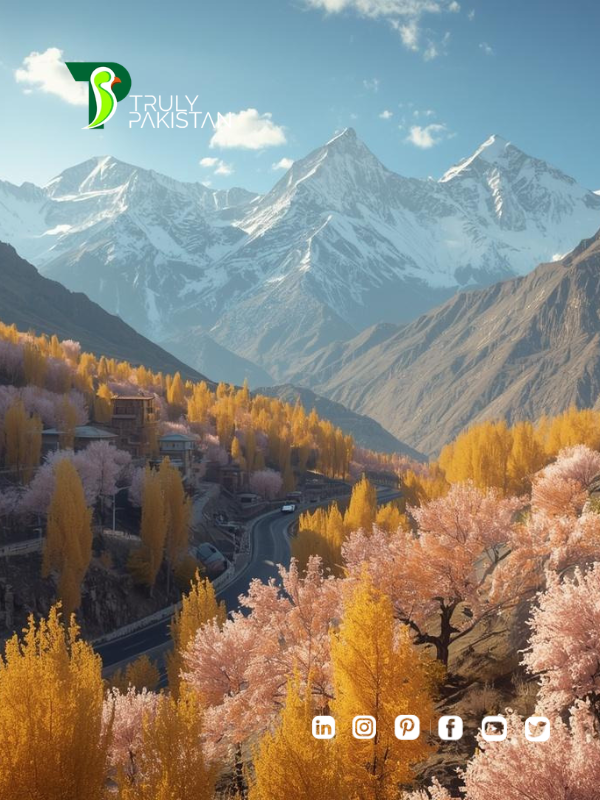
The poplars had turned. Hundreds of them, lining every terrace and irrigation channel from Aliabad north to Gulmit, had gone a yellow so complete and unapologetic it looked painted. Against the silver-grey of the rock walls and the white of the peaks above, the effect was almost theatrical — a landscape that had decided, for one month every year, to be spectacular about itself.
My guesthouse host, a man named Karim, was waiting at the gate when I arrived. He was holding a plate of dried apricots. ‘These are from last summer,’ he said. ‘Take them. They are better than anything you will find downstairs in the bazaar.’ He did not wait for an answer. He was already carrying my bag.
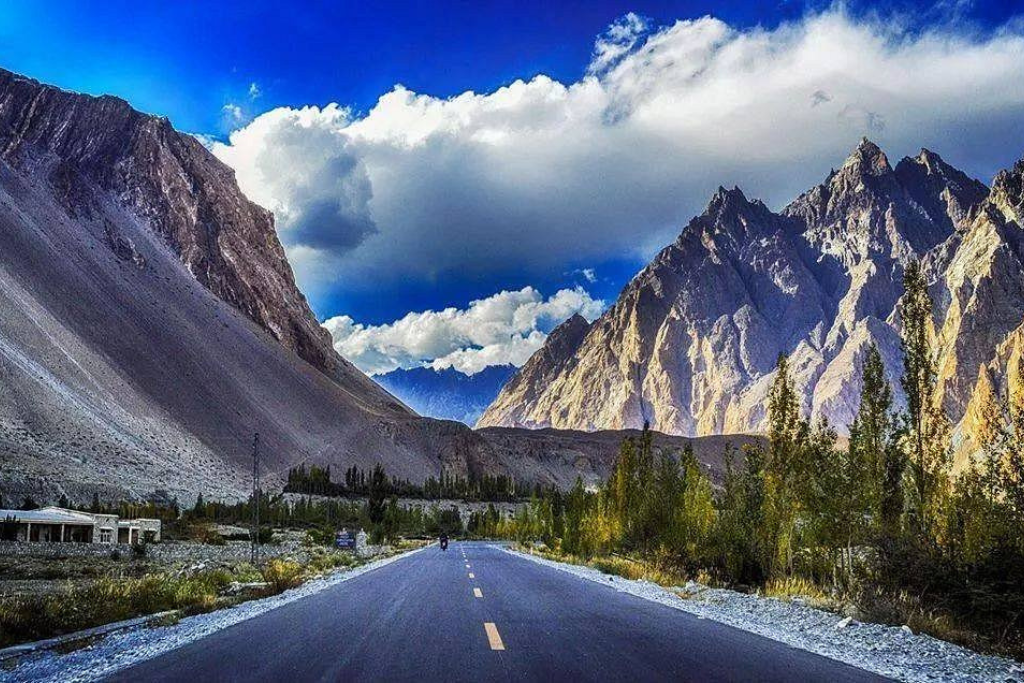
Image Source:https://www.tripadvisor.com/
Understanding Where You Are: A Kingdom 900 Years in the Making
Before you can understand Hunza, you need to understand what it was. Not a village. Not a region. A kingdom — the Kingdom of Hunza, ruled by hereditary monarchs called Mirs — that operated as an independent principality for nearly nine centuries, from approximately the 13th century until 1974, when Prime Minister Zulfiqar Ali Bhutto dissolved Pakistan’s remaining princely states and formally absorbed the valley into the newly renamed Northern Areas.
For most of those centuries, Hunza was genuinely isolated. The valley sits at roughly 8,200 feet above sea level, enclosed on all sides by some of the highest mountain walls on earth. To the north: the Karakoram. To the east: the Nagar Valley and its rival kingdom. To the west: the Gilgit Agency, under British influence from the 1890s onwards. The geography made Hunza essentially self-governing by default.
The Mirs of Hunza claimed descent from the armies of Alexander the Great. Whether or not you accept the genealogy, the claim reflects something true about Hunza’s cultural position: this was a place where the Silk Road ran directly through the valley, where Persian, Tibetan, Central Asian, and eventually Chinese influences layered onto each other over centuries, creating a people and a culture unlike any other in the subcontinent.
Their language, Burushaski, is a language isolate — meaning it has no known relatives anywhere on earth. Linguists have spent decades searching for cognates and found none. The Burusho people of Hunza speak it today, alongside Urdu and increasingly English. Children in Karimabad switch between all three without apparent effort. But Burushaski remains the language of the kitchen, the field, and the festival — the one that carries memory.
“They built a kingdom in a place geography said was impossible — and they made it self-sufficient, literate, and hospitable for nine hundred years.”
In 1891, the British Empire, engaged in the ‘Great Game’ with Russia over the northern approaches to India, launched a military expedition into Hunza. The last fully independent Mir, Safdar Ali Khan, fled to Kashgar in China. His brother was installed as a British-backed ruler. Hunza became a princely state — nominally sovereign, practically managed.
After Pakistan’s independence in 1947, Hunza acceded to Pakistan. The princely states were dissolved in 1974. The Mir’s palace in Karimabad still stands, now a museum. The family still lives in the valley. Some of the elders will point out the current Mir’s house as you walk through the upper lanes of Karimabad — a private residence, politely removed from the tour circuit, but present.
Baltit Fort: A Castle That Remembers Everything
The fort appears above you before Karimabad fully resolves into its own shape. You’re driving up the switchbacks, and there it is: a tiered structure of timber, stone, and clay, Tibetan in its architectural grammar but Hunzai in its details, perched on a moraine 300 feet above the town. Built approximately 700 years ago as the royal residence of the Mirs, Baltit Fort was continuously inhabited until 1945, when the then-Mir moved to a new palace down the hill and the fort began its long, slow decline.
By the 1990s, sections of the fort were in critical structural danger. The Aga Khan Trust for Culture intervened. What followed was one of the most significant heritage conservation projects in South Asia: a fifteen-year restoration, completed in 1996, that stabilized the structure, restored its original finishes, and converted it into a museum and cultural center. The project won a UNESCO Asia-Pacific Heritage Award for Cultural Heritage Conservation.
Inside the fort, the rooms have been restored to their 19th-century appearance. The Mir’s audience chamber. The women’s quarters, with their carved wooden screens. A room given over to gifts from foreign dignitaries — the 19th century equivalent of diplomatic protocol, displayed with bemused pride. The upper terrace is where most visitors end up standing in silence.
On the morning I visited, the caretaker — a man of perhaps sixty, in a traditional Hunza pakol cap and a green vest — offered to explain the structure without being asked. He pointed to the wooden beams holding the balcony ceiling: ‘Deodar cedar. The original wood. We are using the same species for all replacements. The Aga Khan Trust insisted.’ He knocked on one of the original beams and listened to the sound. ‘Still solid,’ he said, as if he were checking on an old friend.
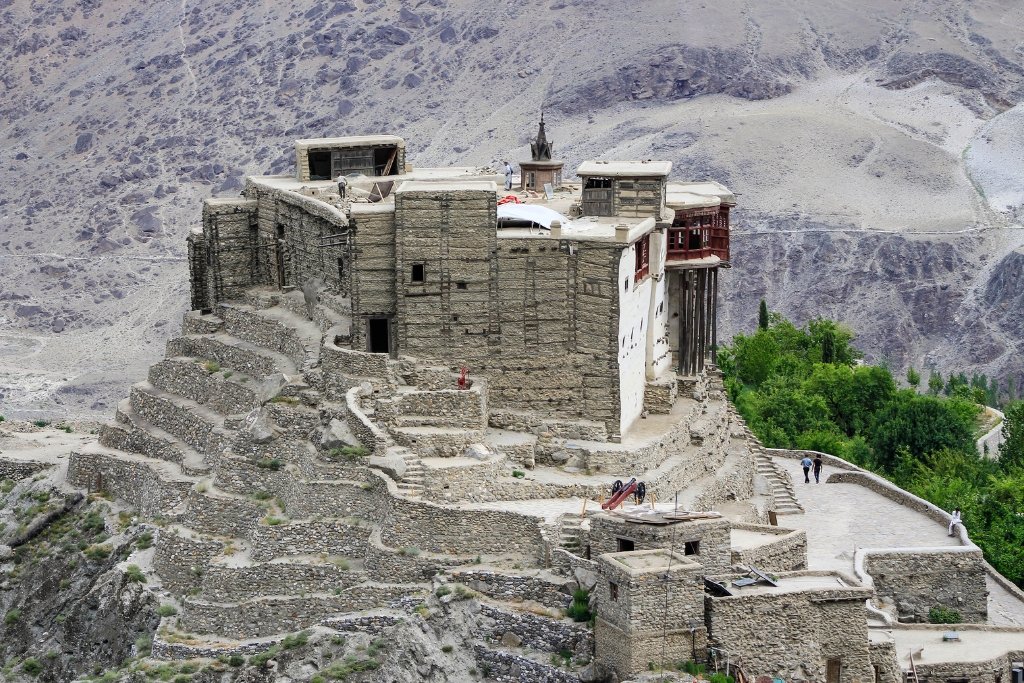
Image Source:https://pakheritage.org/baltit-fort/
The People and the Culture: What No Photograph Fully Captures
On my third morning in Karimabad, I was invited to breakfast at the home of a retired schoolteacher named Shirin Bano. This was not arranged through a tour operator or guesthouse. I had met her daughter the day before in the bazaar, who had asked where I was from, listened to the answer, and said: ‘Come to our house tomorrow morning. My mother makes Diram Phitti for guests.’
Diram Phitti is a bread made from sprouted wheat — wheat that has been soaked overnight, spread on wet cloth to germinate over several days, then dried and milled into a flour of unusual sweetness. The resulting bread, dense and slightly sticky, is baked on a flat iron pan and served warm with apricot oil. It is a dish made only on special occasions: Navroz, Ginani, weddings, and, apparently, for foreign visitors who stumble into the right conversation in a bazaar.
Shirin Bano was 72. She had been a schoolteacher in Karimabad for thirty years. She told me that the Aga Khan Education Services had built and staffed over 200 schools across Gilgit-Baltistan, that literacy rates in Hunza had reached above 95%, that her own daughters — all four of them — had university degrees. ‘In my mother’s time, women did not go to school,’ she said. ‘Now my granddaughter wants to study engineering in Islamabad.’ She poured more tea. ‘We tell her: go.’
The Burusho people of Hunza are predominantly Ismaili Muslims — followers of the Aga Khan, the 49th hereditary Imam of the Ismaili branch of Shia Islam. The Ismaili community’s emphasis on education, women’s participation in public life, and institutional development through the Aga Khan Development Network (AKDN) has made Hunza one of the most progressive communities in northern Pakistan.
Women move freely through Karimabad’s bazaar. They run shops. They work as guides. The women’s social enterprise in Altit village — established with AKRSP support and now employing over 90 women in carpentry, embroidery, and craft production — produces carved wooden items sold both locally and internationally. When you buy a carved apricot-wood spoon from a stall in Karimabad, there is a good chance it was made there.
“In my mother’s time, women did not go to school. Now my granddaughter wants to study engineering in Islamabad. We tell her: go.” — Shirin Bano, retired schoolteacher, Karimabad
Arts, Crafts, and the Music That Lives in the Mountains
The bazaar in Karimabad is a single main street of perhaps 300 meters, lined with shops selling dried apricots, gemstones, handwoven shawls, embroidered caps, carved wooden boxes, apricot oil, walnut oil, and saffron. It is not a tourist market in the sanitized sense of something built to sell to visitors. It is the actual commercial and social spine of the town, where residents buy their flour and their kerosene alongside the hand-embroidered purses and the lapis lazuli pendants.
Gilgit-Baltistan is one of the most gemstone-rich territories in the world. Rubies, garnets, aquamarine, topaz, emeralds, and tourmaline are all mined in the region. The shops in Karimabad sell both rough stones and polished pieces. The AKRSP gem-cutting centers — seven across GB and Chitral — have trained local cutters in proper faceting technique, upgrading the value of stones that previously sold raw at a fraction of their potential price.
The traditional embroidery of Hunza — applied to caps, vests, bags, and women’s dresses — uses silk thread in geometric patterns derived from Central Asian weaving traditions. The women who produce it learn from their mothers and grandmothers. The patterns are not written down; they are transmitted through practice. Each village has slight variations in color palette and motif that function as a kind of geographic signature.
The Music of the Dadang and the Surnai
On my fourth evening, there was a gathering at the community center near the main square. A group of young men from a village called Murtazabad had come down for what Karim explained, somewhat vaguely, as ‘a practice.’ It was, in fact, a performance — three musicians playing traditional instruments for each other and for anyone who happened to wander in.
The dadang is a double-headed drum, played with hands and a curved stick. The surnai is a double-reed wind instrument, nasal and penetrating, capable of pitches that feel like they originate in the mountains rather than the instrument. The music they made together that evening was rhythmically complex and harmonically strange to a Western ear — not in an unpleasant way, but in a way that communicated: this music is very old, and it grew up somewhere other than anywhere you have been.
The Leif Larsen Music Centre in Altit village — established by the Aga Khan Trust for Culture — exists specifically to document and teach these musical traditions, which are at risk of disappearing as younger generations migrate toward cities. That the music is still being played, still being transmitted, owes something to that institution and something to the stubbornness of communities who have decided that this, specifically, is worth keeping.
Navroz and Ginani: The Calendar of the Valley
If you are planning your Hunza trip around culture rather than adventure, there are two festivals that define the valley’s ritual year. The first is Navroz — the Persian New Year, celebrated on March 21st, the spring equinox — which is not a relic of a distant cultural connection but a fully alive annual event. Families clean their homes. Special foods are prepared: Harissa, Chapshuro, and Diram Phitti. The Ismaili Jamatkhanas hold special prayers. People dress in traditional clothing. There is dancing in the streets of Karimabad.
The second is Ginani — the harvest festival, held in summer when the wheat comes in. Ginani is older than Navroz in Hunza’s calendar and more directly agricultural in character: it celebrates the land’s provision, the season’s success. There are harvest dances, communal meals, and folk songs that are specific to the harvest — songs that name the fields, the irrigation channels, and the particular mountains visible from particular terraces. It is a festival that only makes sense in place, in this valley, with these mountains.
| Time of Year | Event / Season | What to Expect |
|---|---|---|
| March 21 | Navroz (Spring New Year) | Best cultural immersion, pre-blossom season, fewer tourists |
| April | Peak Cherry Blossom | Visually spectacular — accommodation books out months ahead |
| June / July | Ginani (Harvest Festival) | Warm weather, high-altitude passes fully open, harvest dances and communal meals |
| October | Golden Autumn Foliage | Post-peak crowds, trekking season closing — arguably the most beautiful and most private month to visit |
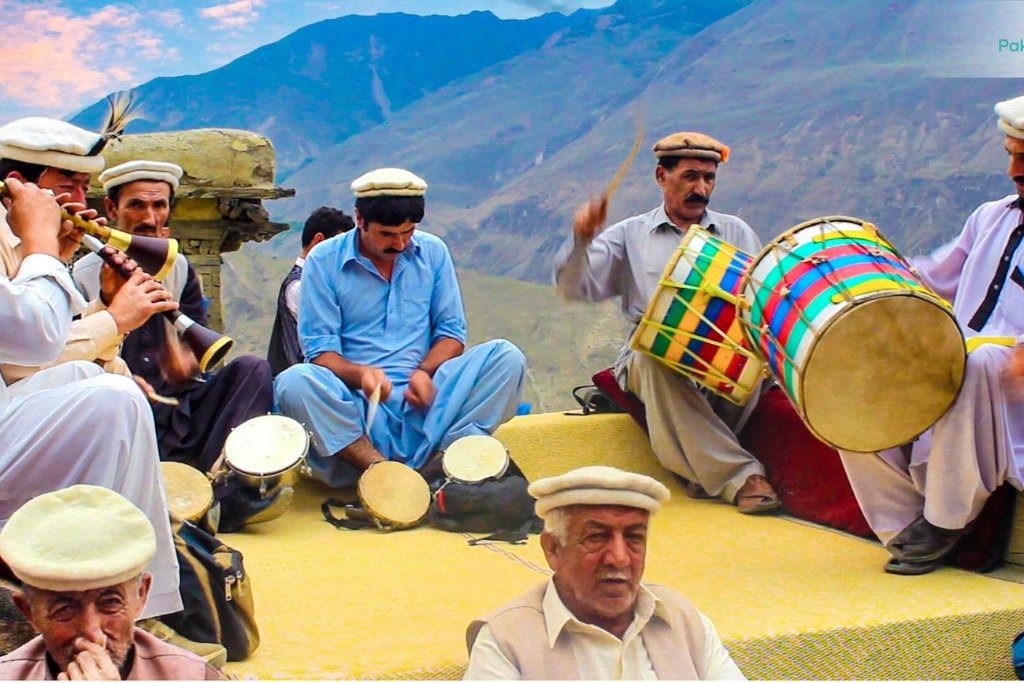
Image Source:https://www.pakvoyager.com/news/things-to-do-in-karimabad-hunza-valley
The Food: Apricot Oil, Glacial Flour, and the Dish Made Only for Guests
I ate Chapshuro for the first time at a small place on the main street of Karimabad called Café de Hunza. It arrived as a flat, slightly blistered pastry about the size of a dinner plate, filled with minced beef, onions, and green herbs — a kind of mountain meat pie that the café has been making the same way for as long as anyone there could remember. The outside was crisp from the dry pan. The inside was juicy enough to soak through the pastry if you were not quick. Alongside it: a small dish of apricot chutney and a glass of walnut tea.
Hunza’s cuisine is, at its core, a cuisine of preservation and altitude. For centuries, the valley was essentially self-sufficient — the growing season was short, the winters were long, and the mountain walls made supply from outside difficult. Apricots were the answer: dried in the summer sun on rooftop racks and stored through winter, they provided sugar, calories, and — pressed — the apricot oil that served as both cooking fat and medicine.
Molida is the dish made specifically for honored guests. Shirin Bano made it for me on my second visit. Crushed flatbread, rehydrated dried cheese, and apricot oil — served in a single communal bowl, eaten with a spoon from the center. It has a texture between porridge and stuffing and a flavor profile unlike anything else: savory from the cheese, slightly sweet from the apricot oil, with the specific earthiness of whole grain flour ground in a stone mill.
The best place to understand Hunza food systematically is the Hunza Food Pavilion in Karimabad — a cultural kitchen established to document and teach traditional recipes, run by local women. It is as much an archive as a restaurant. The women who cook there narrate the history of each dish as they prepare it: where the recipe comes from, what occasion it belongs to, which ingredient is the hardest to source now that younger women are not drying apricots the old way.
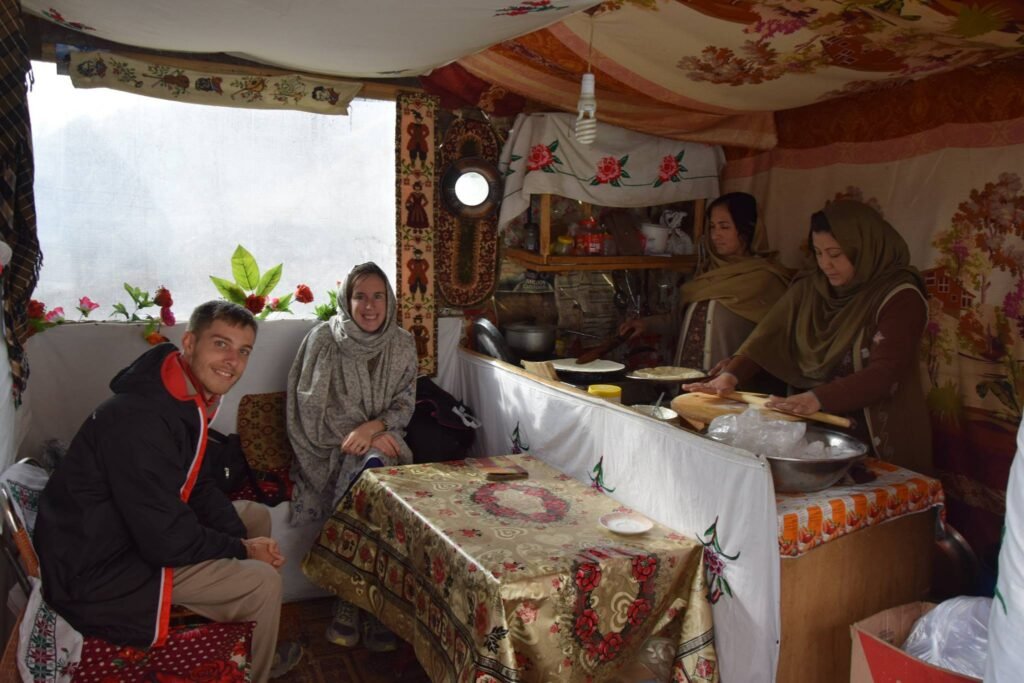
Image Source:https://www.facebook.com/photo/
Attabad Lake: The Accidental Wonder That Changed the Valley
On January 4, 2010, at 7:30 in the morning, a section of mountain above the village of Attabad released itself into the Hunza River. The landslide — estimated at 50 million cubic meters of rock and debris — was one of the largest ever recorded in Pakistan. It killed 20 people and injured eight others. It buried the village of Attabad. It blocked the Hunza River completely, and over the following five months, as floodwaters rose, it inundated approximately 26 kilometers of the Karakoram Highway and displaced over 6,000 people.
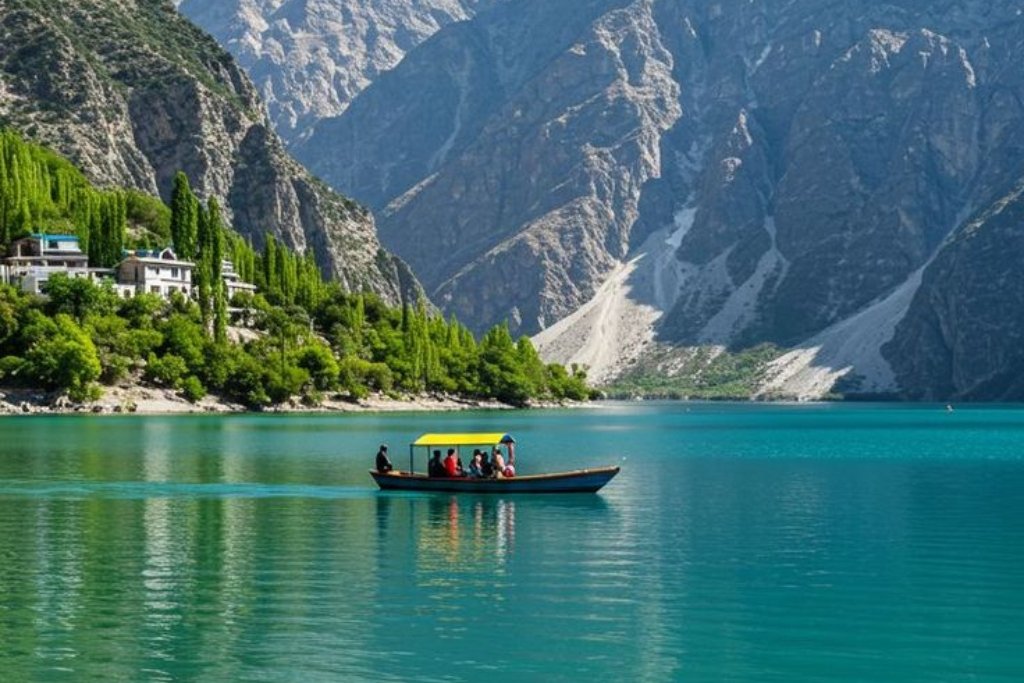
The lake that formed is 14 miles long, over 300 feet deep in places, and stained a turquoise so exact and so intense it seems to have been color-corrected. The source of the color is rock flour — ultra-fine particles of rock ground down by glacial action — suspended in the water, which selectively scatters blue light wavelengths.
When I took a boat across it — forty minutes from the boat launch near the old dam site to the far shore — the water was so clear I could see the road beneath us: the old KKH, submerged, still recognizable as pavement, passing under the hull like a memory of the valley that used to be there. The boatman — a man named Naseem from Gulmit, who had been running this route since the lake formed — pointed out where his family’s orchard had been, now under fifty feet of water.
Naseem was not bitter. He had pivoted: bought a boat, then two boats, now runs a small fleet that employs six of his relatives. ‘The lake gave us back something,’ he said, steering with one hand. ‘Different. But something.’ His children had never known the valley before the lake. For them, the turquoise water was simply where they lived. Which is how landscapes always work, eventually.
What Development Actually Looks Like Here: Government Efforts and the Aga Khan Network
The transformation of Hunza over the past three decades is not accidental. It is the product of sustained institutional intervention — by the government of Pakistan, by the government of Gilgit-Baltistan, and most significantly by the Aga Khan Development Network (AKDN), which has been operating in this region for over a century.
AKDN’s footprint in Gilgit-Baltistan is difficult to overstate. The Aga Khan Rural Support Programme (AKRSP) has since 2011 supported 27 vocational training centers, 30 women’s markets, and seven gem-cutting centers across GB and Chitral — training over 7,850 people, 80 percent of them women, in business management, and more than 8,000, 95 percent women, in product development. The Aga Khan Health Services runs clinics and hospitals throughout the region. The Aga Khan Education Services operates schools and teacher-training programs that have contributed directly to Hunza’s 95%-plus literacy rate.
In June 2024, Pakistan’s Prime Minister Shehbaz Sharif met with AKDN leadership and invited the network to invest further in Pakistan’s tourism sector and renewable energy. The meeting resulted in the inauguration of the Nasirabad Software Technology Park in Hunza — a joint project between the Special Communications Organization (SCO) and the Aga Khan Foundation — providing high-speed internet, uninterrupted solar power, and co-working infrastructure for freelancers, startups, and chambers of commerce in GB.
A candid perspective: the economic benefits of tourism in Hunza are real but unevenly distributed. Responsible travelers can directly address this imbalance by staying in locally-owned guesthouses, eating at family-run restaurants, buying crafts from community enterprises, and hiring local guides through verified operators.
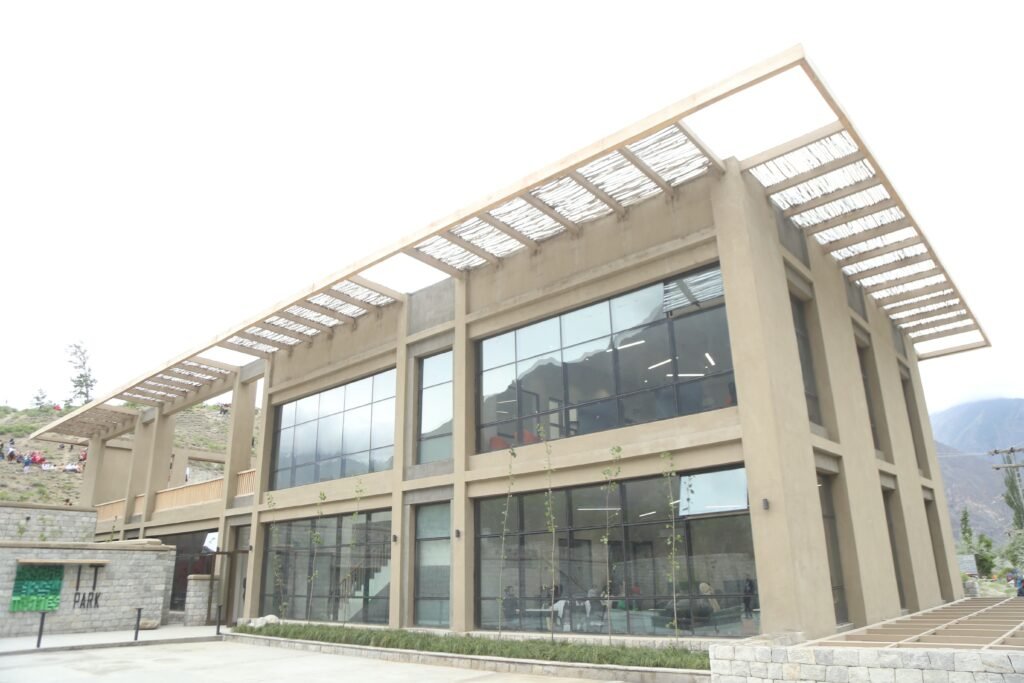
Image Source:https://the.akdn/en/resources
The Evening at Eagle’s Nest: When Seven Peaks Turn the Color of Copper
Eagle’s Nest Hotel sits on a ridge above Duikar — the highest village in Hunza, at roughly 9,700 feet. The hotel name is literal: from its terrace, you are looking down at the valley and up at the peaks simultaneously, which creates the specific sensation of being suspended between two scales. Below: the lights of Karimabad coming on as dusk settles, the ribbon of the KKH still visible in the blue light, the poplars glowing their final gold before dark. Above: Rakaposhi, Ultar Sar, Diran, Golden Peak, and Ladyfinger, all catching the last direct sunlight from the west while the valley below is already in shadow.
I arrived at 4:30 PM with Karim, who had insisted on driving me up. ‘You cannot see this once and go home,’ he said. ‘You must see it now and you must see it next time. Both times it will be different.’ A waiter brought blankets without being asked. The blankets were heavy wool, the color of oatmeal, and smelled of cedar. I wrapped mine around my shoulders and stood at the terrace railing and watched the peaks do the thing they do in October, when the sun angles correctly and everything turns simultaneously gold.
There were two other guests on the terrace that evening: a couple from the Netherlands, first time in Pakistan, who had arrived that morning from Islamabad by flying to Gilgit and driving up. The woman turned to me at some point and said, with the specific directness that people acquire when they have been standing in front of something much larger than themselves: ‘Is all of Pakistan like this, or just here?’
I told her: no, not all of it. Each region has its own register of beauty. But Hunza in October, at this hour, from this height — this is its own category. She nodded and turned back to the peaks. We didn’t speak again until the light was gone.
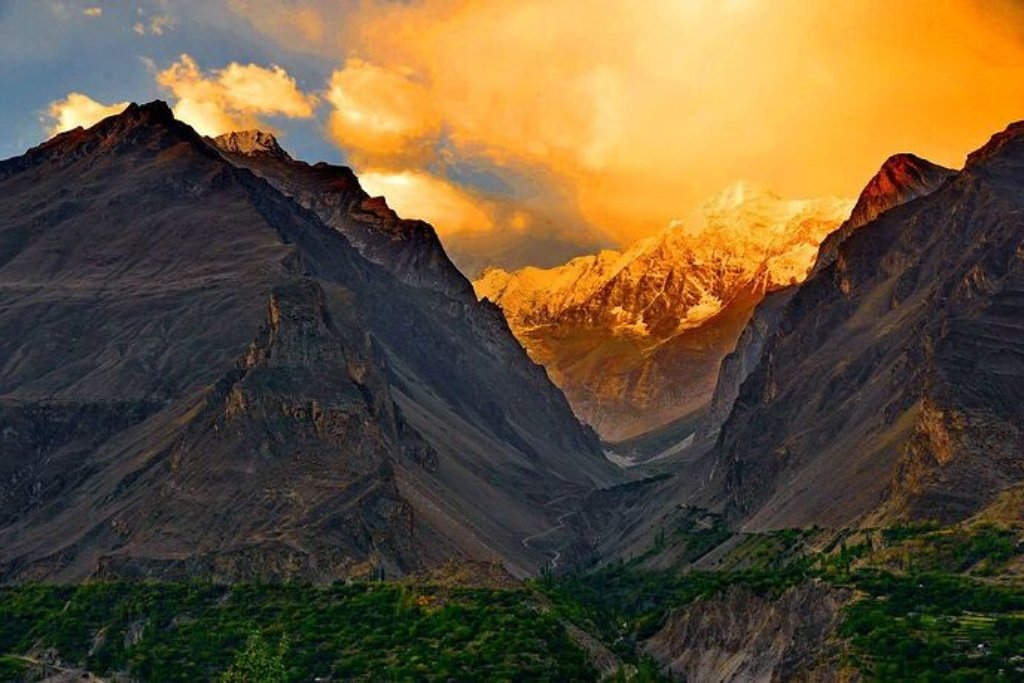
Image Source:https://www.localguidesconnect.com
Before You Go: What You Actually Need to Know
Getting There
Fly Islamabad (ISB) to Gilgit on PIA (45 minutes, mountain views, left-side window seat recommended). Drive Gilgit to Karimabad: 2.5–3 hours. Alternatively, drive the full Karakoram Highway from Islamabad: 18–22 hours, best broken into two days with a night in Besham or Chilas. October roads are fully open and conditions are dry.
Visa
US, UK, EU, Australian, and most Western passport holders qualify for Pakistan’s e-visa — applied online at visa.nadra.gov.pk, typically approved within 3–5 business days. For step-by-step instructions by country of origin, see TrulyPakistan’s Pakistan Visa Guide. For the evidence-based safety answer, see TrulyPakistan’s safety guide for American tourists.
Best Time for This Route
October. Golden foliage, clear skies, cool but comfortable temperatures (35–65°F / 2–18°C at Karimabad elevation), all roads open, post-peak-season crowd reduction. Cherry blossom (April) is the other unmissable window — book accommodation months in advance.
Budget
Mid-range: $40–70 USD per day (locally-owned guesthouse, local food, hired driver for day trips). Luxury range: Eagle’s Nest Hotel, Luxus Hunza Attabad Lake Resort, or Hunza Serena Hotel — $120–250 USD per night. Respect the community: stay local, eat local, buy local.
What to Bring
Layers — temperatures swing 30°F between morning and afternoon in October. Good walking shoes for uneven stone paths in Karimabad and the fort terraces. Cash (PKR) — ATMs exist in Karimabad and Aliabad but connection is unreliable. Download offline maps before leaving Gilgit. A blanket for Eagle’s Nest.
The Last Morning
On my final morning in Hunza, I woke before dawn and walked to the edge of the terrace outside my room. The valley was dark, the peaks barely visible as shapes against a sky that was transitioning from black to a deep and particular blue. The Hunza River — 2,000 feet below and invisible — made a sound you could feel more than hear.
Karim appeared behind me with tea. He had not been asked. He had simply calculated, correctly, that this was the right moment. We stood there for perhaps twenty minutes as the light came in from the east and the peaks assembled themselves, one by one, out of the darkness.
‘When will you come back?’ he asked, not as a business question but as a real one.
I thought about this. About the cherry blossom in April and the harvest festival in June and the particular quality of the October light I was watching right now as it moved across Rakaposhi. About the music at the community center and the apricot oil on the Diram Phitti and the old schoolteacher who sent her daughter to study engineering in Islamabad. About the submerged road under the turquoise water of Attabad Lake and the boatman who made something new from what the mountain had taken.
‘In spring,’ I said. ‘To see the blossoms.’
He nodded. ‘I will save apricot oil. From this harvest. For when you come.’
“Pakistan doesn’t need to be discovered. It needs to be believed.”
Plan your Hunza journey with verified local operators at trulypakistan.net. For first-time visitors, read our safety guide for American tourists.
Research Sources & References
- Hunza Valley — History and Princely State. Wikipedia.
- Burusho People — Language and Culture. Wikipedia.
- Hunza Food Traditions. SOCH Outreach Foundation via Google Arts & Culture.
- Festivals — Navroz and Ginani. Pleiades Travel / Pacific Trips.
- AKDN Conservation and Development in Gilgit-Baltistan. Aga Khan Trust for Culture.
- AKDN Economic Development — Women’s Enterprise, Vocational Training. Aga Khan Fund for Economic Development.
- Nasirabad Software Technology Park — June 2024. Aga Khan Development Network.
- GB Tourism Economics — GDP Contribution, Tourist Arrivals. Wikipedia / GB Tourism Department.
- Attabad Lake Formation — 2010 Landslide. Wikipedia.
- Responsible Tourism and Environmental Concerns in GB. The News International / PIDE Working Paper 2023:4.
- Hunza Princely State Dissolution 1974. Wikipedia.
- James Hilton — Shangri-La and Hunza. Multiple travel and tourism sources.
One thought on “A Travelogue from Hunza”