Eva zu Beck had been to 44 countries before she arrived in Pakistan for the first time in April 2018. She came, as she later put it, with all the usual stereotypes. Within minutes of landing, she said, those stereotypes were being shattered.
She ended up staying for over a year. After Pakistan, she named it her favourite country of all those she had visited — specifically because of the hospitality, which she described as unlike anything she had experienced anywhere else in the world. At a tourism conference in Islamabad, she told the Pakistani government directly: this country could become the number one tourist destination on Earth.
Eva zu Beck is not an outlier. She is one data point in a pattern that has repeated consistently across thousands of Western visitors over the past decade. The State Department advisory says Level 3. The visitors come back and say something else entirely. This article is about what they actually say — drawn from traveler accounts, documented experiences, and the data behind the numbers.
- Over 1 million international tourists visited Pakistan in 2024 — up nearly 30% from 2023.
- 2,380 foreign climbers and trekkers applied for permits in Gilgit-Baltistan alone in 2024.
- Pakistan tourism revenue grew 58% in 2024 vs 2023.
- The British Backpacker Society ranked Pakistan #1 adventure destination in the world (2018).
- Condé Nast Traveller named Pakistan the Best Holiday Destination for 2020.
- CNN named Gilgit-Baltistan a top 25 must-visit destination for 2025.
Understanding the Gap: Why the Advisory and the Experience Diverge
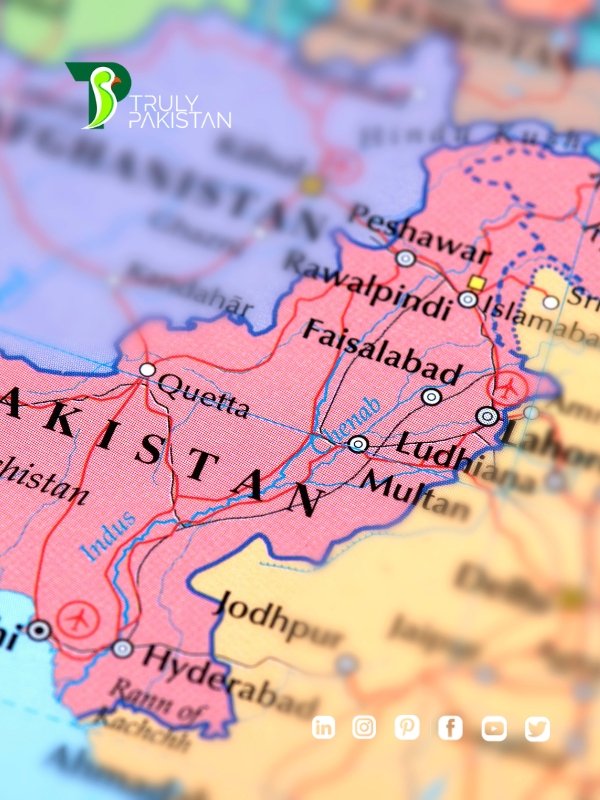
The US State Department’s Level 3 advisory for Pakistan reflects a real calculation. The country contains genuinely dangerous areas. Balochistan, the KPK/former FATA corridor, and areas near the Line of Control carry Level 4 Do Not Travel designations — and those designations are accurate.
The problem is that the advisory applies to the whole country — 340,000 square miles, 259 million people, five distinct geographic regions with dramatically different security environments. The same advisory number that reflects conditions in the Balochistan-Afghanistan border area also covers Hunza Valley, where the most commonly reported incident in traveler accounts is being invited to a stranger’s home for tea.
This is not a flaw in the advisory system — it is its inherent limitation. A national-level advisory cannot distinguish between the Baltoro Glacier and the Balochistan desert. What fills that gap is traveler testimony. And traveler testimony on Pakistan, across thousands of documented accounts, runs in a remarkably consistent direction.
Level 4 zones (Do Not Travel): Balochistan · KPK/former FATA · Line of Control vicinity
Where tourists go: Gilgit-Baltistan · Hunza · Skardu · Islamabad · Lahore · Swat · Kaghan
These are entirely separate places. The advisory that covers one does not describe the other.
Full regional safety breakdown → Is Pakistan Safe for American Tourists?
The Traveler Voices: What People Say After They Return
Eva zu Beck — Polish-British Travel Vlogger, 60+ Countries
Eva zu Beck arrived in Pakistan in 2018 having visited over forty countries and with no particular expectation about what she would find. What she found was, in her own account, the most hospitable country she had visited anywhere in the world. She stayed for over a year.
— Eva zu Beck, Polish-British travel blogger — from a 2019 interview
At a tourism conference in Islamabad attended by senior government officials, zu Beck told attendees that Pakistan could become the world’s number one tourist destination. She noted that the most frequent request she received from ordinary Pakistanis she met was to tell the world that Pakistan was safe, peaceful, and welcoming — something that, she said, had never happened to her anywhere else.
Rosie Gabrielle — Canadian Motorcyclist
Rosie Gabrielle crossed Pakistan on a motorcycle — 11,000 kilometers, solo, through cities, valleys, deserts, and mountain roads. She undertook the trip, by her own account, to challenge what she had been told about the country.
— Rosie Gabrielle, Canadian motorcyclist — published statement on completing her Pakistan journey
Gabrielle’s account is notable for two reasons. First, she was a solo female traveler — a category that Western narratives about Pakistan would mark as particularly at risk. Second, her journey covered genuinely remote terrain, not curated tourist circuits. Her conclusion was not that Pakistan was comfortable or easy, but that the safety concerns she had been led to expect simply did not materialize.
The British Backpacker Society — Samuel Joynson and Adam Sloper
When the British Backpacker Society ranked Pakistan the world’s number one adventure travel destination in 2018, it was not a theoretical decision. The founders had spent two weeks in the country, traveling overland from Lahore through Islamabad, Naran, Gilgit, and finishing in Hunza Valley.
— Samuel Joynson, British Backpacker Society — speaking to Gulf News, 2018
Their published travel advice specifically addressed the gap between the UK Foreign Office advisory and the ground reality: they recommended travelers review official advisories and also speak directly to Pakistanis and recent visitors. Their conclusion from doing exactly that was to rank Pakistan above every other adventure destination on Earth.
Drew Binsky — American Travel Vlogger, 197 Countries
Drew Binsky has traveled to every country in the world. His Pakistan coverage became some of his most-watched content. He is frequently cited for a simple observation about Pakistani hospitality that resonated internationally.
— Drew Binsky, American travel vlogger — describing the hospitality he encountered
The context: Binsky found that locals consistently refused to accept payment for food, transport, and accommodation — treating him as a guest rather than a customer in ways he had not encountered at the same scale in his travels through 196 other countries. His Pakistan videos collectively accumulated millions of views and introduced the country to audiences with no prior exposure.
Alex Reynolds — American Blogger, ‘Lost With Purpose’
Alex Reynolds is worth including precisely because her account is the most nuanced of the group. An American blogger who visited Pakistan five times, she has been notably more measured in her assessments than some other Western voices — pushing back publicly on coverage she felt glossed over real difficulties.
Her consistent position: Pakistan is not easy, security forces and bureaucratic friction can be problems for independent travelers, and anyone going should understand the real landscape rather than expect a sanitized version. At the same time, her blog Lost With Purpose provided some of the most detailed and practically useful independent travel writing about Pakistan available in English — and she kept coming back. Five times. Reynolds’ account matters specifically because it refuses to be promotional. She never said Pakistan was simple. She said it was worth it.
What the Pattern Actually Looks Like: Five Consistent Themes
Reading through thousands of documented traveler accounts from Western visitors to Pakistan over the past decade — from formal journalism to personal blogs to TripAdvisor reviews to YouTube video comments — five themes appear with unusual consistency.
1. The Hospitality Surprises Every Time
The single most recurring element in Western traveler accounts of Pakistan is not the scenery — it’s the people. Being invited into homes, receiving free meals from strangers, being accompanied by locals who voluntarily rearrange their days to help a lost visitor — these are not exceptional events in traveler accounts. They are routine ones. Eva zu Beck described it as a concept ‘quite alien to us in the Western world’ — an unconditional welcome extended to strangers that she had encountered in few other places on Earth.
2. The Reality Is More Complicated Than Either Side Claims
Honest Western traveler accounts do not paint Pakistan as uniformly wonderful. Infrastructure can be unreliable. Bureaucratic friction — particularly for independent travelers dealing with police checkpoints and permits — is documented repeatedly. Some areas carry genuine security concerns that no amount of hospitality changes. The traveler consensus is not ‘Pakistan is safe.’ It is more precise than that: the places tourists actually go to are different from the places the advisory is written about, and the experience of being in Hunza or Lahore or Islamabad is different from what Western media coverage would lead you to expect.
3. Gilgit-Baltistan Consistently Earns the Strongest Accounts
The northern mountain regions — and Gilgit-Baltistan in particular — generate the most consistently positive safety assessments. Major tourist areas including Lahore, Islamabad, Hunza, Skardu, Fairy Meadows, and Swat are described as feeling safe with ‘incredibly welcoming’ locals. This aligns with the official data: Gilgit-Baltistan carries no Level 4 US State Department advisory, and the region had 2,380 foreign climbers and adventure tourists in 2024, up from 2,100 in 2023.
4. Solo Female Travelers Frequently Report Better Experiences Than Expected
Western media narratives about Pakistan carry a particular weight when it comes to women traveling alone. The traveler record pushes back on this consistently — not by claiming there are no challenges, but by documenting that the specific safety concerns anticipated often did not materialize. Eva zu Beck lived in Pakistan for over a year as a solo female, including extended time in remote northern regions. Rosie Gabrielle crossed 11,000 kilometers on a motorcycle alone. The pattern across these accounts is consistent: the safety concern was stated before arrival; the reality was different after.
5. Visitors Who Go Once Usually Come Back
The return-visit rate among Western travelers to Pakistan is a data point that rarely gets discussed. Alex Reynolds visited five times. The British Backpacker Society founders returned. Drew Binsky, who has visited every country on Earth and therefore has infinite options, made Pakistan content a sustained part of his output. Return visits are the most credible safety signal available. Travelers who found Pakistan genuinely dangerous don’t go back. The pattern of repeat Western visitors — including people with the resources and freedom to go literally anywhere — is a meaningful data point that doesn’t appear in any official advisory.
The Distinction That Matters: Media Coverage vs. Tourist Circuit
Pakistan’s security situation gets extensive Western media coverage. The coverage is not fabricated — the incidents it reports on are real. But the geography of those incidents and the geography of Pakistan’s tourist circuit have very limited overlap.
| Location | Media Coverage Level | Tourist Activity Level |
|---|---|---|
| Balochistan-Afghanistan border | High — active incidents | Minimal — Level 4 Do Not Travel |
| KPK/former FATA areas | High — active incidents | Minimal — Level 4 Do Not Travel |
| Line of Control (Kashmir) | High — geopolitical tension | Minimal — Level 4 Do Not Travel |
| Gilgit-Baltistan (Hunza, Skardu, K2) | Low — rarely covered | High — thousands of tourists annually |
| Islamabad | Occasional — city incidents | High — capital city, diplomatic hub |
| Lahore | Moderate — periodic incidents | High — major tourist destination |
| Swat Valley | Historical coverage (pre-2014) | Growing — transformed since operations |
The inverse relationship in the table above is the core of the narrative gap. The places that generate Western media coverage are largely the places tourists are not. The places tourists actually go generate very little Western media coverage — which means American readers forming a picture of Pakistan from news alone are constructing it almost entirely from the wrong geography.
What This Means for Your Decision
Traveler testimony is not a substitute for due diligence. The accounts documented here come from experienced travelers who researched their trips, understood the regional distinctions, traveled with reputable operators where appropriate, and registered their itineraries with relevant embassies. Their positive experiences did not happen by accident.
What traveler testimony does provide is a corrective to the picture formed by advisory language alone. The State Department advisory tells you Pakistan contains serious risks. The traveler record tells you those risks are geographically concentrated in places you are very unlikely to go, and that the places you will go are operating in a different reality.
The questions worth asking are: Which region am I going to? What do travelers who have been to that specific region report? Am I traveling with a licensed operator where one is required? Do I have appropriate insurance? Have I registered with the STEP program? Travelers who answer those questions honestly and prepare accordingly have been visiting Pakistan’s mountains, cities, and heritage sites for years — and coming back.
Is Pakistan Safe for American Tourists? The Complete Evidence-Based Guide
Adventure Travel in Pakistan: The Ultimate 2026 Guide
Gilgit-Baltistan: Everything You Need to Know
Frequently Asked Questions
Plan Your Pakistan Trip with Confidence — Start with TrulyPakistan