The Ultimate Guide for 2026
- 5 of the world’s 14 peaks above 8,000 meters are in Pakistan — including K2, the second-highest.
- The Karakoram range contains more 7,000-meter peaks than anywhere else on Earth.
- Pakistan was ranked the world’s #1 adventure travel destination by the British Backpacker Society (2018).
- Gilgit-Baltistan was named to CNN Travel’s Top 25 Destinations for 2025.
- Trekking permits: $150 USD per person for Baltoro restricted zone. Climbing fees not increased for 2026.
- Best season: June–September for high-altitude trekking. October for Fairy Meadows and lower trails.
- Safety: Gilgit-Baltistan carries no Level 4 travel advisory from the US State Department.
The British Backpacker Society spent two weeks in Pakistan in 2016. When they came back, they published a simple verdict: Pakistan is the world’s number one adventure travel destination. Then they described the Hunza Valley as ‘the most beautiful natural sight on earth.’ That was not promotional language. It was the conclusion two experienced adventure travelers reached after crossing the Karakoram Highway, climbing to 4,257 meters above Karimabad, and standing where some of the greatest mountaineers in history have stood before them.
Pakistan’s case for adventure travel is not subtle. The country contains five of the world’s fourteen peaks above 8,000 meters including K2, the second-highest mountain on Earth and statistically the most demanding. It holds the Baltoro Glacier, at 39 miles one of the longest non-polar glaciers on the planet. It contains the Karakoram Highway, frequently described as the most spectacular road trip in the world. It has Fairy Meadows, which has no equivalent for the combination of accessibility and visual drama it delivers. And it has the Hunza Valley, which keeps appearing on global ‘best places’ lists because it keeps earning it.
This guide is the hub for adventure travel planning on TrulyPakistan. It covers the landscape, the key adventures, the seasons, the permits, the costs, and what you actually need to know before you go. Every specific adventure — K2 base camp, Fairy Meadows, the Karakoram Highway, Gilgit-Baltistan has its own dedicated guide linked from this page. Start here. Go deep from here.
Pakistan Adventure Travel — At a Glance
| Category | Details |
|---|---|
| 8,000-meter peaks | 5 — K2 (8,611m), Nanga Parbat (8,126m), Gasherbrum I (8,080m), Broad Peak (8,051m), Gasherbrum II (7,986m) |
| 7,000-meter peaks | More than any other country — Rakaposhi, Ultar Sar, Batura Sar, and dozens more |
| Longest non-polar glacier | Baltoro Glacier — 39 miles / 63 km (K2 trek route) |
| Primary adventure region | Gilgit-Baltistan — 72,971 sq km of mountain terrain |
| Secondary regions | Azad Kashmir · KPK (Swat, Kaghan, Chitral) · Northern Punjab |
| Top trekking routes | K2 Base Camp (Baltoro) · Nanga Parbat Base Camp (Fairy Meadows) · Rakaposhi BC · Rush Lake |
| Best season | June 15 – September 30 for high-altitude trekking |
| Trekking permit (Baltoro) | $150 USD per person — CKNP environmental fee |
| Climbing fees (2026) | Unchanged from 2025 — K2 individual permit ~$3,500 (summer) |
| US visa | eVisa online · visa.nadra.gov.pk · 5–7 business days |
| Safety (Gilgit-Baltistan) | No Level 4 advisory · Strong safety record for trekking tourism · Full safety guide |
| Global recognition | BBS #1 adventure destination 2018 · Condé Nast #1 holiday destination 2020 |
| Tourism growth | Pakistan tourism revenue +58% in 2024 vs 2023 · Market estimated USD 4.91 billion in 2026 |
The Geography: Why Pakistan Has No Rival for Adventure
Adventure travel is ultimately about terrain — and terrain is the one thing Pakistan has in quantities that no other destination can match. The country sits at the collision point of three of the world’s great mountain ranges: the Karakoram, the Hindu Kush, and the Himalayas. Where they meet, in the northeastern corner of Pakistan’s Gilgit-Baltistan province, the concentration of extreme altitude is unlike anywhere else on Earth.
The numbers are the argument: five peaks above 8,000 meters, more 7,000-meter peaks than any other country, and glaciers that measure in tens of miles rather than kilometers. The Baltoro Glacier alone — the route to K2 base camp is 39 miles long and a mile wide in places. Trekkers crossing it spend multiple days on the glacier itself, not passing it.
Beyond the Karakoram, Pakistan’s adventure terrain extends into Azad Kashmir, where the Neelum Valley and Shounter Lake offer wilderness without the permit complexity of Gilgit-Baltistan. Into KPK, where the Swat Valley has transformed over fifteen years into one of Pakistan’s most accessible mountain destinations and where the Kaghan Valley’s Naran-Babusar Top route is a genuine high-altitude road journey. And into Chitral, where the Kalash people and the Hindu Kush create a cultural-adventure combination found nowhere else.
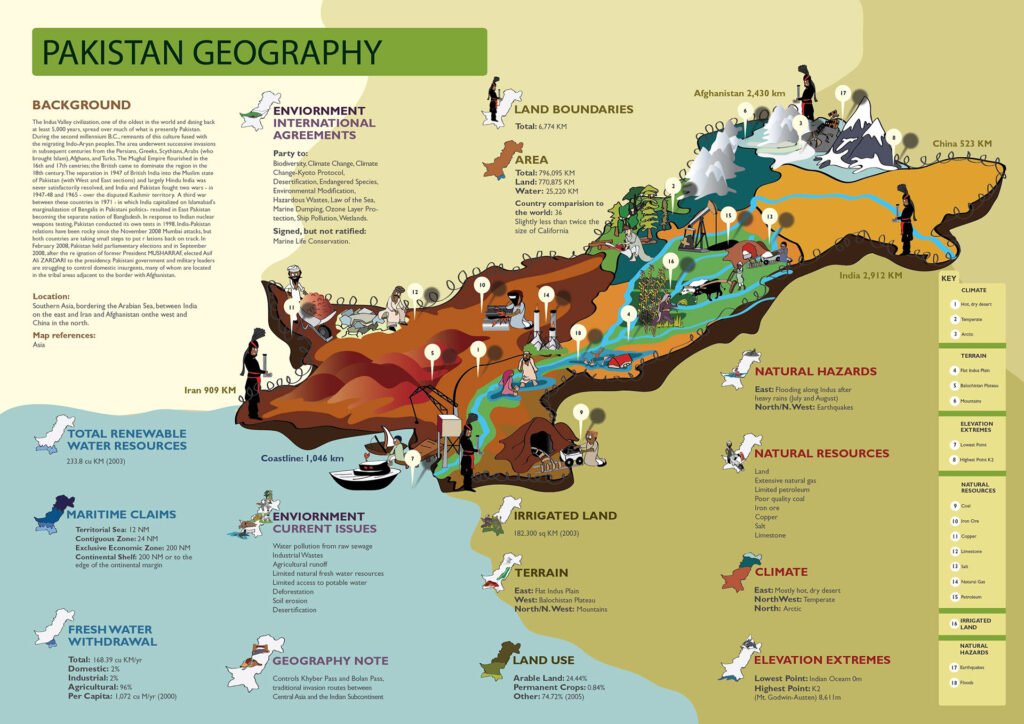
Image Source:https://cssprepforum.com/
| Region | Terrain Type | Key Adventures |
|---|---|---|
| Gilgit-Baltistan | Karakoram — extreme | K2 base camp, Nanga Parbat BC, Hunza Valley, Attabad Lake, Karakoram Highway, Khunjerab Pass, Shimshal Valley, Rush Lake |
| Azad Kashmir | Himalayan foothills | Neelum Valley, Shounter Lake, Ratti Gali Lake, Kel village, Taobut Valley |
| Khyber Pakhtunkhwa | Hindu Kush — varied | Swat Valley, Kaghan/Naran, Babusar Top, Mahodand Lake, Chitral, Kalash Valleys, Shandur Pass |
| Northern Punjab | Himalayan approach | Fairy Meadows access route, Naran road, Lulusar Lake, Saif-ul-Malook Lake |
The Five Adventures That Define Pakistan’s Reputation
Pakistan offers more adventure options than any one guide can contain. What follows are the five that have built the country’s global reputation the ones that belong on every serious adventure traveler’s list.
1. K2 Base Camp Trek (Concordia) — The Pinnacle
The K2 base camp trek is 14 days, approximately 100 miles round trip, across the Baltoro Glacier to Concordia the point where K2, Broad Peak, and the Gasherbrums all come into view simultaneously. It is the highest concentration of 8,000-meter peaks visible from a single location anywhere on Earth.
This is not the most technically demanding adventure in Pakistan, but it is the most serious. The glacier crossing requires confidence, physical preparation, and a licensed guide. Returning trekkers consistently use the same language: nothing prepared them for how large K2 actually is.
Duration: 14–16 days (trekking) + 2–3 travel days each side
Max altitude: 14,764 ft / 4,691 m (Concordia) · Optional K2 BC extension: 16,900 ft / 5,150 m
Permit: $150 CKNP environmental fee (operator handles) · Guide: mandatory
Cost: $3,400–$6,200 all-in from USA · Season: June 15 – August 15
Full guide → K2 Base Camp Trek: Complete 2026 Guide
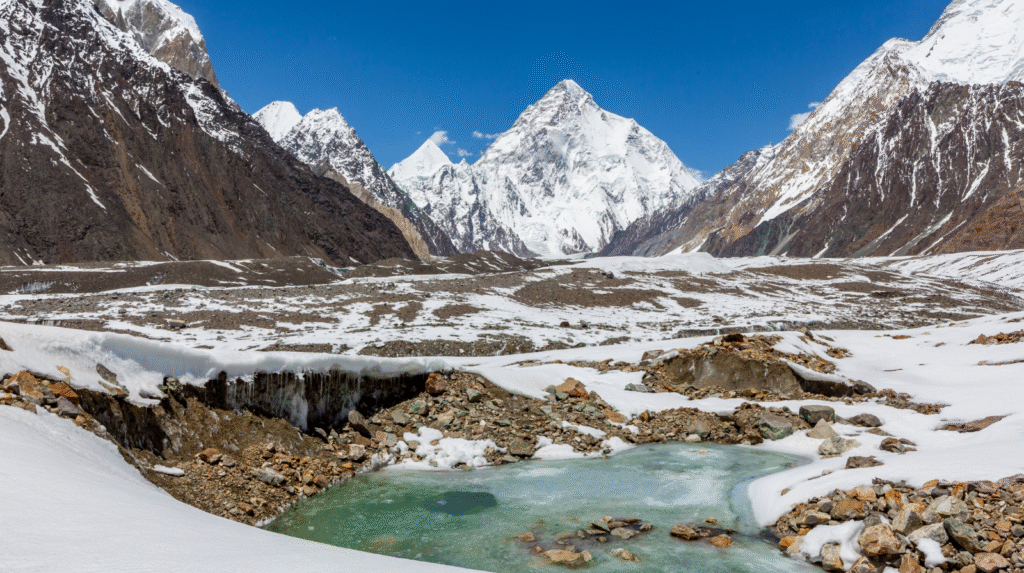
2. Fairy Meadows & Nanga Parbat Base Camp — The Most Accessible Drama
Fairy Meadows is the most emotionally powerful adventure in Pakistan that doesn’t require glacier crossing or multi-week commitment. A 4WD jeep ride up a notoriously steep dirt road deposits you at a meadow at 3,300 meters with an unobstructed view of Nanga Parbat’s 8,126-meter north face rising directly above.
From Fairy Meadows, a 3–4 hour hike reaches Nanga Parbat base camp. The total trip from Islamabad to base camp and back can be completed in 3–4 days. For American trekkers who want an honest high-altitude experience without the 14-day Baltoro commitment, this is the answer.
Base: Fairy Meadows meadow at 3,300 m jeep access from Raikot Bridge
Trek to Nanga Parbat BC: 3–4 hours each way from Fairy Meadows
Duration: 3–5 days total from Islamabad including travel
Difficulty: Moderate — no glacier, no technical terrain
Season: May – October · No special permit required
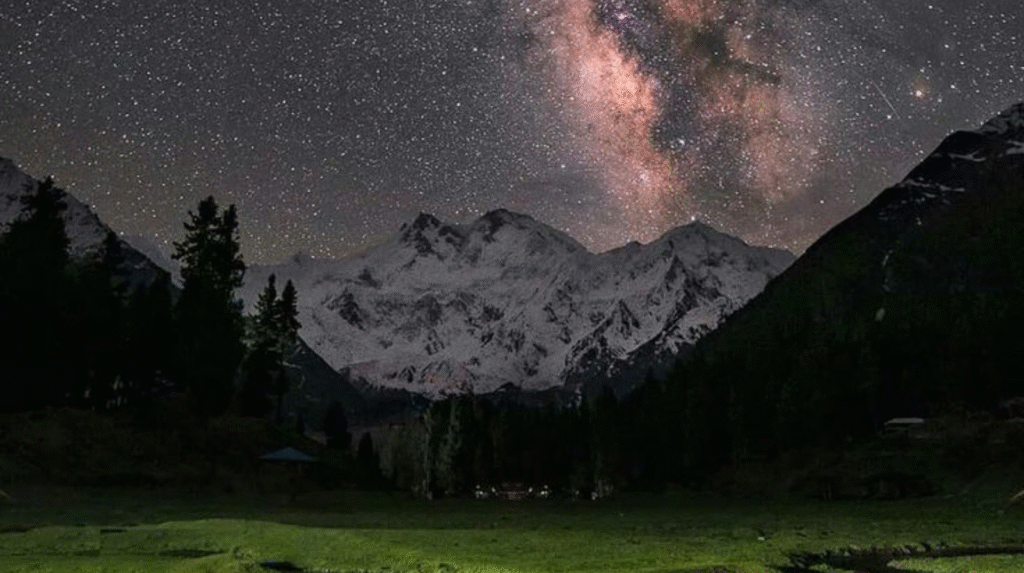
3. The Karakoram Highway, The World’s Greatest Road Trip
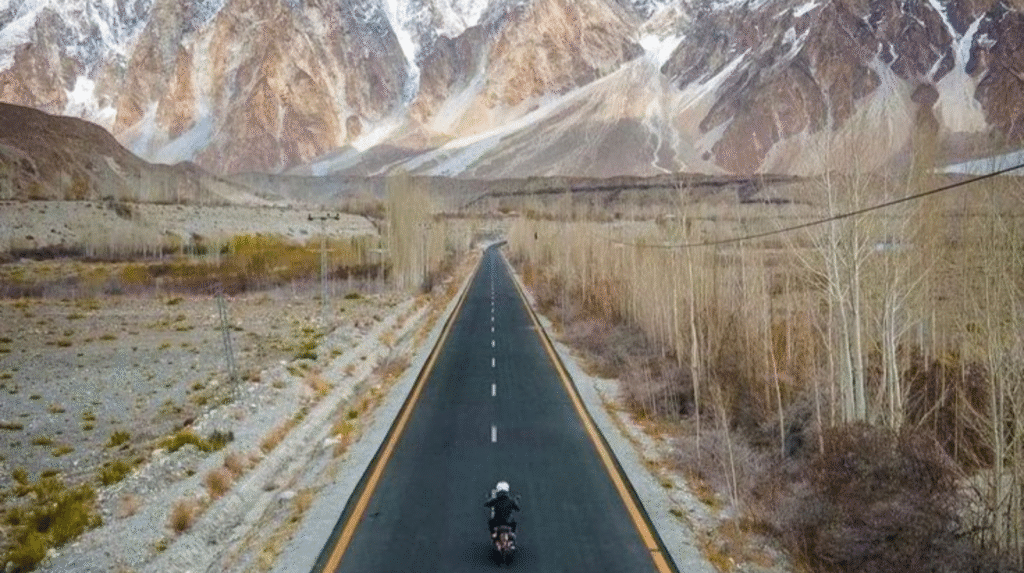
The Karakoram Highway runs 1,300 kilometers from Islamabad to the Chinese border at Khunjerab Pass, following the route of the ancient Silk Road through the heart of the Karakoram range. It is the highest paved international road in the world, reaching 4,693 meters at the Khunjerab Pass.
For travelers who do not trek, the KKH is their access to the Karakoram. The drive from Islamabad to Hunza takes 14–16 hours but passes through some of the most dramatic mountain scenery on Earth. Every serious adventure travel itinerary in Pakistan uses the KKH as its spine.
Length: ~1,300 km Islamabad to Khunjerab Pass (China border)
Khunjerab Pass altitude: 4,693 m / 15,397 ft — world’s highest paved international border
Key stops: Besham, Chilas, Gilgit, Karimabad (Hunza), Passu, Sost
Drive time: 14–16 hours Islamabad to Hunza (with stops usually done over 2 days)
Season: Open year-round to Hunza · Khunjerab Pass opens May, closes November
4. Hunza Valley ,The Base for Everything
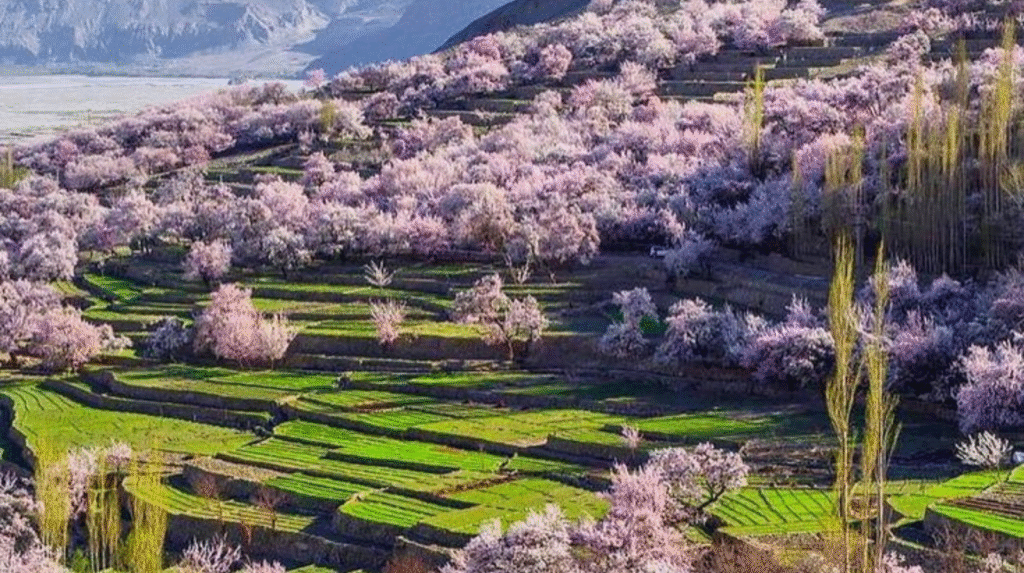
Hunza Valley is not a single adventure — it is a base of operations for a week’s worth of them. Baltit Fort (700 years old), Altit Fort (1,100 years old), Eagle’s Nest viewpoint (seven peaks visible simultaneously), Attabad Lake (turquoise glacier water in a canyon), Hussaini Suspension Bridge, and day hikes to Rakaposhi base camp are all accessible from Karimabad.
Hunza consistently appears on global ‘best places’ lists because it delivers mountain scenery, living history, extraordinary food, and one of the most genuine hospitality cultures in the world. The Ismaili Muslim community that forms the majority of the valley’s population is widely noted for its education, openness, and warmth toward international visitors. Read our full travelogue: The October the Valley Went Gold.
Main town: Karimabad at 2,438 m / 7,999 ft
Key sites: Baltit Fort, Altit Fort, Attabad Lake, Eagle’s Nest, Ganish Village
Best season: April–October (April = blossoms, July–August = green peak, October = autumn colours)
Getting there: Fly Islamabad–Gilgit (1 hr) then drive 2 hrs · Or 14-hr KKH road trip
Full guide → Hunza Valley: Why It Keeps Appearing on Every Best List
5. Gilgit-Baltistan ,The Province That Contains Everything
Gilgit-Baltistan is not a single destination. It is a province the size of Austria, containing the Baltoro Glacier, K2, Nanga Parbat, Hunza, Skardu, the Indus River, and over a dozen destinations that could each anchor a standalone adventure travel guide.
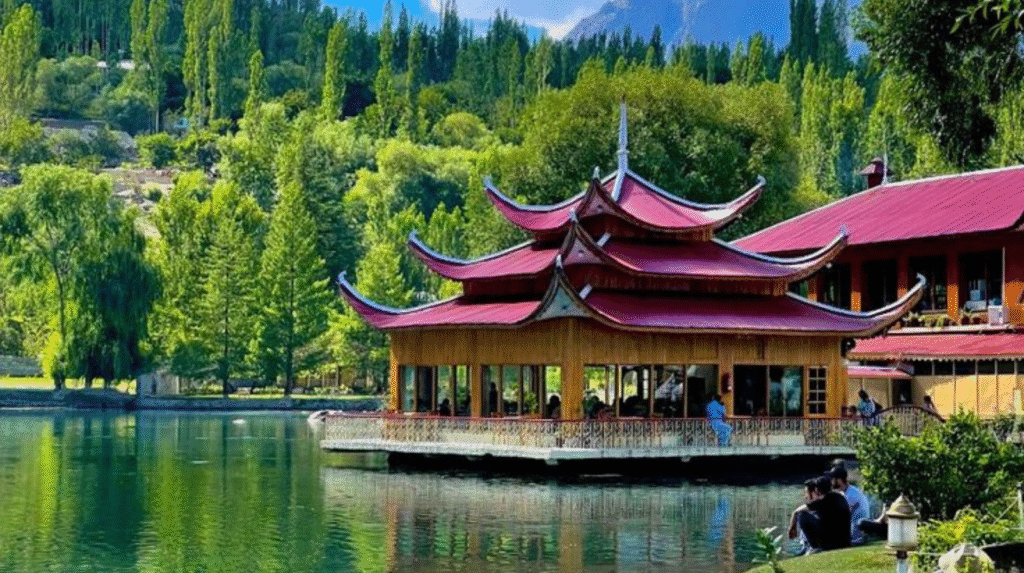
Skardu — the province’s second major town and the gateway to K2 has its own lake (Shangrila Lake), its own ancient fort (Kharpocho), its own desert (Katpana Cold Desert), and its own airport. The Deosai Plateau, at an average altitude of 4,114 meters, is the second-highest plateau in the world and one of Pakistan’s most important wildlife habitats — home to the Himalayan brown bear and a significant snow leopard population.
Area: 72,971 sq km (approximately the size of Austria)
Major towns: Gilgit · Skardu · Karimabad (Hunza) · Chilas
Key highlights: K2, Nanga Parbat, Hunza, Skardu, Deosai Plateau, Khunjerab Pass
Getting there: Fly Islamabad–Gilgit or Islamabad–Skardu (both ~1 hour, PIA/Serene Air)
CNN Travel: Named to Top 25 Destinations for 2025
Full guide → Gilgit-Baltistan Destination Guide
When to Go: Pakistan’s Adventure Season Calendar
Pakistan’s adventure window is specific and non-negotiable. High-altitude destinations are inaccessible in winter and the monsoon creates instability on approach roads to key areas. Understanding the seasonal calendar is the difference between a trip that works and one that doesn’t.
| Season | Months | Conditions | Best Adventures |
|---|---|---|---|
| Spring | March–May | Blossoms in Hunza (April). Roads clearing. Lower elevations accessible. | Hunza blossoms, Swat, Kaghan, Neelum Valley, Fairy Meadows from late April |
| Peak Summer | June–August | Best window for high-altitude trekking. K2 and Baltoro accessible from mid-June. | K2 Base Camp, Nanga Parbat BC, Karakoram Highway, Hunza, Skardu, Rush Lake |
| Late Summer | September | Excellent conditions. Fewer crowds. Baltoro still open. Autumn beginning in Hunza. | All high-altitude treks still viable · Hunza autumn beginning |
| Autumn | October–November | Spectacular foliage in Hunza. Baltoro closes mid-October. Lower trails excellent. | Hunza autumn, KKH road trip, Swat, Chitral, photography |
| Winter | December–February | Khunjerab closed. Baltoro closed. Roads above Hunza difficult. | Islamabad, Lahore, Karachi, lower Punjab heritage travel |
K2 Base Camp (July departure): Book operator NOW peak slots fill March–April
Fairy Meadows (June–September): Book 4–6 weeks ahead flexible, less pressure
Karakoram Highway self-drive: Book international flights now; arrange local car on arrival
Hunza guesthouses (July–August): Book 4–6 weeks ahead some premium properties sell out earlier
Choosing Your Adventure: Difficulty Levels
Pakistan’s adventure options span a wide range of physical demands. The mistake most first-time visitors make is assuming it’s all K2-level commitment. It isn’t. The country has excellent options for day hikers, road trippers, and cultural travelers who want mountains as the backdrop rather than the objective.
| Level | Who It’s For | Best Adventures |
|---|---|---|
| Easy — Day Hikers | First-timers, families, travelers wanting access without commitment | Hunza Valley day walks, Eagle’s Nest viewpoint, Attabad Lake boating, Karimabad Bazaar, Baltit/Altit Forts, Khunjerab Pass drive |
| Moderate — Multi-Day Trekkers | Fit travelers with basic trekking experience | Fairy Meadows + Nanga Parbat BC (3–5 days), Rakaposhi Base Camp, Neelum Valley, Mahodand Lake (Swat) |
| Strenuous — Experienced Trekkers | Prior multi-day high-altitude experience, prepared fitness | K2 Base Camp / Baltoro Glacier (14–16 days), Rush Lake Trek (Hunza), Shimshal Valley, Gondogoro La |
| Technical — Mountaineers | Certified climbing skills and expedition experience | K2 Summit, Nanga Parbat Summit, Broad Peak, Gasherbrum I & II, 6,000m+ peaks in Karakoram |
Permits, Paperwork & Logistics: What You Actually Need
Pakistan’s permit system is operator-managed for most adventures. You do not need to navigate government bureaucracy yourself. What you need to understand is what you’re paying for and what to confirm your operator has handled.
Trekking Permits
Foreign nationals trekking in the restricted zone (Baltoro Glacier and the K2 corridor) require two things: a licensed Pakistani guide from a registered agency, and payment of the CKNP environmental fee of $150 per person. Your operator handles both. Before booking, confirm these are included in the quoted price.
Mountaineering Permits
Climbing permits are issued by the Gilgit-Baltistan Secretariat and are separate from trekking permits. For 2026, climbing fees remain unchanged — K2’s individual summer climbing permit is approximately $3,500 per person, making it more than four times cheaper than an Everest permit.
Pakistan eVisa for US Citizens
All US passport holders require a Pakistan Tourist eVisa, applied online at visa.nadra.gov.pk. Processing averages 5–7 business days. The VPA free visa programme was suspended effective January 1, 2026. See TrulyPakistan’s full Pakistan Visa Guide for US Citizens for the complete step-by-step process.
Travel Insurance
Non-negotiable for any high-altitude adventure. Your policy must include helicopter evacuation coverage. Most reputable operators require proof of adequate travel insurance before confirming your booking.
| Document / Permit | Who Handles It | Notes |
|---|---|---|
| Pakistan Tourist eVisa | You — apply online before departure | visa.nadra.gov.pk · 5–7 business days · $75 fee (approx). Full guide: Pakistan Visa for US Citizens |
| CKNP Environmental Fee (Baltoro) | Your trekking operator | $150 per person · Confirm it’s included in package price |
| Licensed guide assignment | Your trekking operator | Mandatory for Baltoro zone · Operator registers guide with GB Secretariat |
| Mountaineering permit (summits) | Your expedition operator | Varies by peak · K2 ~$3,500 individual summer 2026 |
| Travel insurance (helicopter evac) | You — purchase independently | Mandatory condition for reputable operators |
| STEP enrollment (US citizens) | You — register before travel | step.state.gov — US Embassy Islamabad notified of your presence |
How Much Does Pakistan Adventure Travel Cost? (USD, 2026)
Pakistan is one of the world’s most cost-competitive adventure destinations. The main cost for American travelers is the international flight. Once in Pakistan, daily costs are dramatically lower than comparable destinations in Nepal, Peru, or Patagonia.
| Budget Category | USD Range | Notes |
|---|---|---|
| Return flights USA → Islamabad | $800 – $1,400 | Via Gulf carriers (Emirates, Qatar, Etihad). Book 8+ weeks out. |
| Islamabad → Gilgit/Skardu domestic | $60 – $130 | PIA or Serene Air. Book same day as confirming ground package. |
| K2 Base Camp trek package (14 days) | $1,800 – $2,600 | Group tour, all-inclusive from Skardu. CKNP permit, guide, cook, porters. |
| Fairy Meadows trip (4 days) | $200 – $400 | Jeep + accommodation + guide. Much lower cost, easier logistics. |
| Hunza Valley guesthouse (per night) | $30 – $80 | Mid-range. Breakfast often included. Rooftop Rakaposhi view: ask specifically. |
| Daily meal cost (per person) | $5 – $15 | Generous local food. Higher in Karimabad tourist restaurants. |
| Hired car + driver (per day) | $40 – $70 | Essential for KKH and Hunza day trips. Arrange through guesthouse. |
| Travel insurance (helicopter evac) | $200 – $400 | Non-negotiable for trekking. Shop Global Rescue or World Nomads. |
| 10-day Gilgit-Baltistan trip (total) | $2,500 – $4,500 | Flights + accommodation + food + local transport. No K2 trek. |
| Full K2 Base Camp trip (total USA) | $3,400 – $6,200 | All-in including international flights, trek, insurance, gear rental. |
Nepal Everest Base Camp: $4,000–$8,000+ all-in · Tented teahouses, high crowds in peak season
Pakistan K2 Base Camp: $3,400–$6,200 all-in · Wilderness camping, low crowds, raw glacier environment
K2 climbing permit 2026: ~$3,500 individual · Everest climbing permit 2026: ~$15,000
Is Pakistan Safe for Adventure Travelers? The Straight Answer
The US State Department’s overall Level 3 advisory for Pakistan covers the entire country. Three specific zones carry the highest Level 4 Do Not Travel designation: Balochistan, KPK/former FATA, and the Line of Control area. None of these zones are where adventure tourists go.
Gilgit-Baltistan — the province that contains K2, Hunza, Skardu, the Karakoram Highway, and essentially all of Pakistan’s high-altitude adventure — carries no Level 4 advisory. The region has a strong and consistent safety record for international trekking and mountaineering tourism.
Travel with a licensed operator, carry appropriate insurance, register your trip with the US Embassy STEP program, and research current conditions before departure. For a destination-specific safety breakdown, read TrulyPakistan’s full Is Pakistan Safe for American Tourists guide.
Level 4 zones (DO NOT TRAVEL): Balochistan · KPK/former FATA · Line of Control
Where adventure tourism operates: Gilgit-Baltistan, Azad Kashmir, Swat, Kaghan — NONE are Level 4
Full Pakistan safety guide → Is Pakistan Safe for American Tourists?
Choosing a Pakistan Adventure Operator
Every foreign national trekking in the Baltoro restricted zone must be accompanied by a licensed guide from a registered Pakistani trekking agency. This is a condition of the CKNP permit. The quality difference between operators is significant on a trek of this duration and seriousness.
What a Reputable Operator Provides
- Pakistan Alpine Club certified or equivalent guide certification for lead guide
- Satellite phone carried on route — non-negotiable safety requirement
- Clear porter welfare policy: wages per stage (~$4–6/stage), load limits (25 kg maximum), equipment provision
- Full CKNP environmental fee included in the package price — confirm this explicitly
- Helicopter evacuation protocol — they know the procedure and you need to know they do
- Proof of insurance requirement — legitimate operators ask for yours before confirming your booking
Red Flags to Walk Away From
- No satellite phone on route — this is a dealbreaker, not a negotiation point
- Price below $1,500 for a full Baltoro package — cost-cutting means safety compromise somewhere
- Porters carrying loads above 25 kg — exploitative and indicative of poor operator ethics
- Unwilling to provide guide certification details in writing
Your Complete Adventure Pakistan Reading List
This is the hub page for adventure travel on TrulyPakistan. Every major adventure in Pakistan has its own dedicated guide. Start here. Go deep from the links below.
| Article | Link |
|---|---|
| K2 Base Camp Trek: The Complete 2026 Guide | K2 Base Camp Trek Guide |
| Hunza Valley: Why It Keeps Appearing on Every Best List | Hunza Valley Guide |
| A Travelogue from Hunza — The October the Valley Went Gold | Hunza Travelogue |
| Basho Valley Skardu — Complete Travel Guide | Basho Valley Skardu Guide |
| Gilgit-Baltistan: Everything Before You Go | Gilgit-Baltistan Destination Guide |
| Is Pakistan Safe for American Tourists? | Is Pakistan Safe Guide |
| Pakistan Visa Guide for US Citizens | Pakistan Visa for US Citizens |
| Complete Pakistan Travel Guide 2026 | Complete Pakistan Travel Guide |
| Pakistan for Gulf Families | Pakistan for Gulf Families Guide |
Frequently Asked Questions — Adventure Travel in Pakistan
Pakistan is not waiting to be discovered.
The mountains were here before any travel magazine wrote about them. The glaciers that feed the Baltoro have been moving for millennia. The forts in Hunza were built by people who understood what it meant to live surrounded by extraordinary terrain and still chose this valley, this view, this life.
What changes the only thing that changes is whether you go. The mountains are patient. The trekking season is not.
Plan Your Pakistan Adventure Start with TrulyPakistan