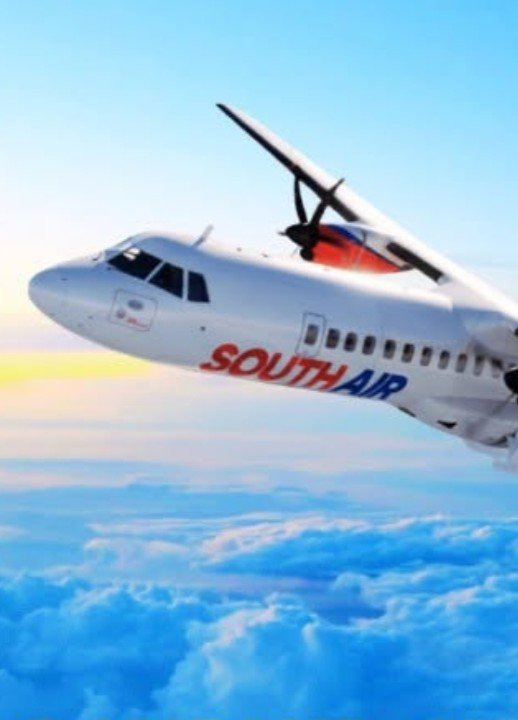
South Air isn’t hiding its expansion plan
CEO Nishat Fatima laid it out at a press briefing at Islamabad’s Serena Hotel: a three-phase, five-year roadmap, short-haul first, medium-haul second, long-haul third, with specific future destinations already named. For an investor, a disclosed roadmap with named targets is a very different proposition than a vague growth story. This one can actually be underwritten.
The routes that haven’t launched yet
SouthAir – CEO, Nishat Fatima
Beyond its current eleven-city network, South Air has publicly stated its intention to add service to Faisalabad, Sialkot, Sehwan Sharif, Chitral, Dera Ismail Khan, Gilgit, and Skardu. Three of those, Chitral, Gilgit, and Skardu, sit at the center of Pakistan’s highest-value, most access-constrained tourism corridor.
That’s not a coincidence, and it’s not a small detail. Northern Pakistan’s tourism ceiling has never really been about demand. It’s been about access. Gilgit and Chitral operate on runways of roughly 5,000 feet, which limits service to turboprop aircraft, exactly what South Air already flies. Weather regularly grounds flights into these valleys. In April 2025 alone, bad weather stranded hundreds of passengers at Skardu when eight flights were grounded in a single stretch. Whoever solves reliable, scheduled access to this region first captures a market that has been constrained by infrastructure, not by traveler interest.
South Air is positioning its fleet expansion directly at that opportunity, including plans to add an ATR-42 specifically suited to lower-demand routes, the aircraft class that makes flying into places like Chitral and Skardu commercially viable in the first place.
The regulatory unlock already in motion
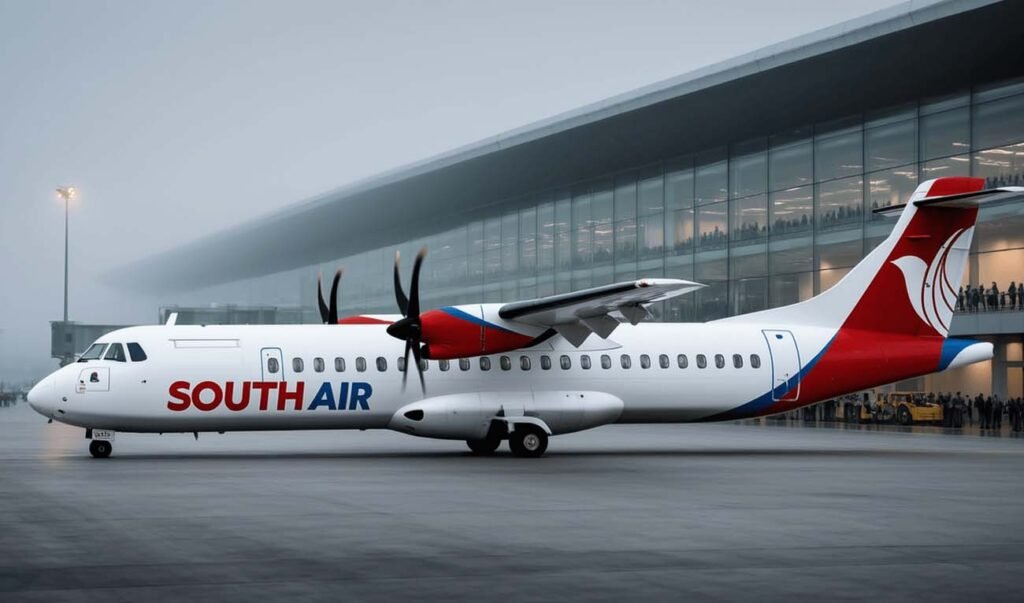
Operating 72 Seater ATR for Domestic Travel
South Air has separately applied for a Regular Public Transport (RPT) licence, which would expand its operating scope beyond the current TPRI framework. This is the kind of detail that’s easy to skip past in a press release and important to flag for anyone doing diligence. The TPRI licence that got South Air off the ground comes with structural limits, and the airline is already working to remove them. An RPT approval would meaningfully widen what routes and frequencies are available to the carrier, a second regulatory unlock stacked on top of the first.
Fleet growth is tracking the same trajectory. From two aircraft in mid-2026, South Air’s stated plan takes it to four by year-end, a doubling of capacity inside a single year, timed to match the northern-corridor and secondary-city expansion it has already announced.
The tailwind underneath this specific bet
South Air isn’t scaling into a vacuum. Pakistan’s aviation sector as a whole is expected to add more than 25 aircraft in 2026, the highest annual influx the country has seen. That’s sector-wide investor and operator confidence returning to Pakistani aviation broadly, not a South Air-specific claim, but it matters as context. Capital, talent, and infrastructure investment are moving into this sector at a pace not seen in the industry’s recent history, and South Air’s expansion is timed directly inside that window.
The upside case gets sharper when you look at what regional connectivity is worth once it scales. India’s UDAN scheme, the closest working comparable to what Pakistan’s TPRI framework is attempting, had operationalized 663 routes across 95 airports, heliports, and water aerodromes by March 2026, carrying roughly 16.3 million passengers. Pakistan’s version doesn’t need to replicate that scale to prove the model works. It needs South Air’s northern-corridor routes to succeed the way its southern routes already have.
And the tourism upside compounds directly. Aviation-supported tourism already contributes $952.1 million to Pakistan’s GDP and 227,900 jobs, according to IATA’s “The Value of Air Transport to Pakistan” report. Every northern route South Air adds pulls previously inaccessible destinations, Gilgit, Skardu, Chitral, into that revenue base for the first time.
What to watch, honestly
This is a growth story, not a sure thing. Fifteen of India’s UDAN-scheme airports remain non-operational due to weather, aircraft availability, and low uptake, a direct precedent for the risk South Air’s northern expansion carries. Turboprop operations into mountain valleys are, by nature, weather-dependent and cancellation-prone. Route-level frequency, load factor, and cancellation data for South Air’s expansion routes aren’t yet public, which limits how precisely this can be underwritten today versus in twelve months.
The bet’s shape is clear, though—a named roadmap. Specific target cities matched to Pakistan’s highest-value tourism corridor. A regulatory unlock already in motion. Fleet growth timed to both. That’s a materially more concrete growth thesis than most early-stage aviation stories get to offer.
Sources
- History of PIA forum, CEO Nishat Fatima press briefing, Islamabad Serena Hotel, May 24, 2026
- IATA, “The Value of Air Transport to Pakistan” (Oxford Economics, 2023)
- CxO News, “Pakistan’s Aviation Industry: Poised for Takeoff in 2026?” (Feb 2026)
- alhamdantravel.com, “South Air Pakistan: Routes, Fares, Booking & Fleet Guide” (Aug 2026)
- Press Information Bureau (India), UDAN scheme statistics, March 2026
- Dawn / Daily Ausaf, Skardu weather disruption, April 2025