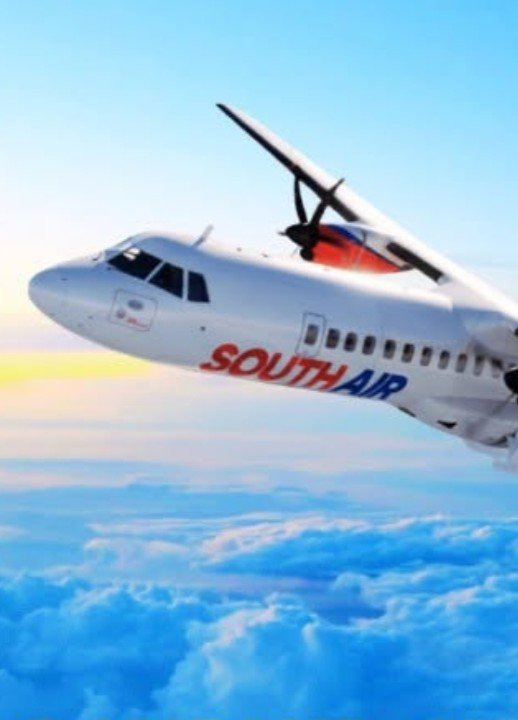
What South Air’s Peshawar–Quetta Flight Could Mean for Pakistan
Disclosure: TrulyPakistan.net attended the South Air Peshawar – Quetta flight operations launch at the airline’s invitation.
On Saturday, a South Air turboprop lifted off from Bacha Khan International Airport bound for Quetta. KP Governor Faisal Karim Kundi cut the ribbon. The airline’s CEO, Nishat Fatima, stood alongside the Chief Minister’s transport adviser and the president of the Sarhad Chamber of Commerce. There were cameras, officials, speeches, handshakes, and the familiar energy that surrounds the opening of a new regional air connection.
At first glance, it may have appeared to be another route inauguration. In reality, the significance goes much further.
Behind the ceremony is a larger and far more important question about Pakistan’s aviation future: can regional air connectivity become a stronger part of the country’s transport, tourism, and economic infrastructure?
South Air’s Peshawar to Quetta service offers an encouraging answer.
The route represents more than a new line on an airline map. It reflects the practical implementation of a policy Pakistan introduced several years ago to encourage stronger regional connectivity and greater participation by private aviation operators.
For South Air, it is another step towards building a regional network capable of connecting cities that have historically had limited direct air links. For passengers, businesses, tourism operators, and provincial economies, it creates new possibilities.
South Air’s launch at Bacha Khan International Airport brought together airline leadership, provincial representatives, members of the business community, media, and invited guests. The following highlights capture key moments from the inauguration ceremony and the departure of the inaugural Peshawar to Quetta flight.
[Peshawar-Quetta Inauguration Flight Event Highlights from Peshawar Airport]
The gap the flight fills
Peshawar and Quetta are roughly 600 km apart by air. On a map, they are two major provincial capitals separated by a relatively manageable distance. On the ground, however, traveling between them can be considerably more demanding.
By road, the journey stretches to around 840 km and can take approximately 10.5 hours under favorable conditions. By rail, the Jaffar Express takes roughly 34 to 35 hours.
A direct air connection significantly changes that equation.
For business travelers, government officials, families, students, tourism professionals, and people traveling between Khyber Pakhtunkhwa and Balochistan, the availability of a direct flight introduces an entirely different level of convenience.
It also demonstrates why regional aviation matters.
Pakistan’s aviation network has traditionally been concentrated around its largest commercial centres, particularly Islamabad, Lahore, and Karachi. Those routes naturally attract large passenger volumes and commercial attention.
Regional connections between provincial capitals and secondary cities, however, can play an equally important role in national integration.
Air connectivity reduces effective distance.
Two cities that may require an entire day of road travel can become accessible within a short flight. That can influence business decisions, tourism movement, government coordination, family travel, and eventually even investment patterns.
Pakistan already possesses significant aviation infrastructure across the country. The next opportunity is to make greater use of those airports by encouraging sustainable regional routes and giving passengers more reasons to fly between cities outside the traditional aviation corridors.
That is where services such as South Air become particularly relevant.
An airport creates infrastructure. A functioning airline network turns that infrastructure into connectivity. The Peshawar to Quetta service therefore represents more than convenience. It is an example of how existing aviation assets can be used to connect provincial economies more effectively.
If the service continues to develop and passenger demand grows, the route could also encourage further connectivity between cities that have historically depended heavily on long-distance road travel.
The rulebook already existed
Pakistan does not need to invent an entirely new aviation framework to support regional connectivity. The foundation already exists. South Air is operating under a Tourism Promotion and Regional Integration, or TPRI, license created under the 2019 National Aviation Policy.
The purpose of the framework is to encourage private carriers to operate routes that can strengthen tourism, regional mobility, and connectivity between cities that may not always attract the attention of larger commercial airlines. The logic behind the policy is important.
Major airlines naturally priorities routes with high passenger volumes and established demand. Regional aviation requires a slightly different approach.
New routes often need time to establish passenger habits, build awareness, develop commercial partnerships, and demonstrate their economic value.
The TPRI framework is designed to create that opportunity.
Under the policy, eligible operators benefit from incentives including waivers on landing, housing, and air navigation charges for an initial period. Such measures can help regional carriers focus resources on establishing networks and building sustainable passenger demand.
South Air’s growing operations provide an example of what this policy can look like when translated into actual flight connectivity.
The airline’s network includes Karachi to Quetta via Turbat, Karachi to Islamabad via Bahawalpur, and now Peshawar to Quetta. Together, these routes begin to form something increasingly important in Pakistan’s aviation landscape: an alternative regional network connecting destinations beyond the country’s busiest aviation corridors.
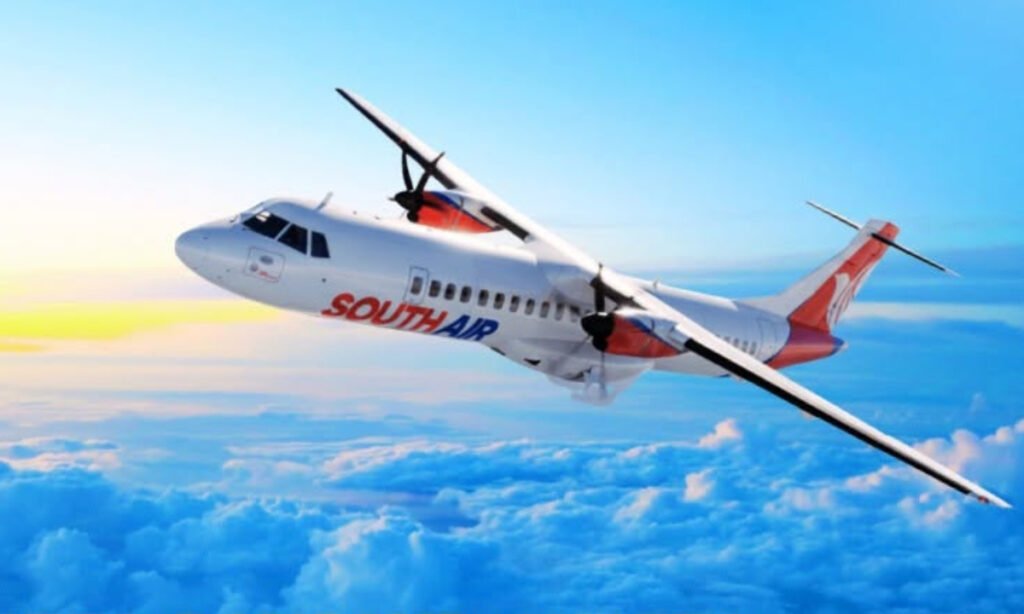
The airline operates ATR 72 aircraft, a platform particularly well suited to regional operations.
Turboprop aircraft play an important role in aviation markets where passenger volumes are developing, flight distances are relatively short, or airport infrastructure does not necessarily require larger jet aircraft.
Pakistan’s geography makes this model especially relevant.
The country has large distances between provinces, mountainous destinations in the north, commercially important secondary cities, and many airports that could potentially support greater passenger movement.
South Air’s approach therefore aligns naturally with the kind of regional aviation ecosystem Pakistan has been attempting to encourage. Aviation policy becomes most meaningful when passengers can actually experience its results. South Air is helping translate that policy into visible connectivity.
Speaking at Governor House Khyber Pakhtunkhwa following the launch, Governor Faisal Karim Kundi discussed the significance of improved regional air connectivity and what services such as South Air could mean for linking Khyber Pakhtunkhwa with other parts of Pakistan.
[Governor KP Talk on South Air Peshawar-Quetta Flight Launch at Governor House in Peshawar]
Why this matters beyond one route
The importance of regional aviation becomes even clearer when viewed through the lens of tourism. Aviation-supported tourism already contributes an estimated $952 million to Pakistan’s GDP and supports approximately 227,900 jobs.
There is considerable room for that contribution to grow.
Pakistan possesses an extraordinary range of tourism assets, including mountain destinations, heritage sites, cultural centres, religious tourism locations, coastal regions, archaeological sites, and adventure travel opportunities.
In many cases, however, the distance between these destinations and major population centres remains one of the biggest considerations for travelers. This is where aviation can transform the tourism experience.
Northern Pakistan provides the clearest example.
Gilgit, Chitral, and Skardu are among the country’s most recognized tourism gateways. Yet geography and weather naturally make access more complex than travel between cities located on Pakistan’s plains. Aircraft capable of operating efficiently on regional routes are therefore particularly important. Gilgit and Chitral operate with relatively short runways, which makes turboprop aircraft such as the ATR well suited to this environment.
As navigation technology improves and regional aviation capacity grows, these destinations could become more accessible to both domestic and international travelers. That would have an impact far beyond the airports themselves.
Improved air access supports hotels, tour operators, transport companies, guides, restaurants, local businesses, adventure tourism companies, handicraft producers, and the wider visitor economy.
Connectivity also makes it easier for tourism operators to design dependable itineraries.
A traveler who can reach a destination efficiently is more likely to consider a shorter trip, combine several destinations, or visit regions that might otherwise feel logistically difficult.
In tourism, accessibility is part of the product.
The easier a destination is to reach, the easier it becomes to promote. This is why South Air’s interest in destinations such as Gilgit, Chitral, and Skardu could eventually become particularly important for Pakistan’s tourism ecosystem.
If regional services continue expanding alongside improvements in airport navigation infrastructure, Pakistan could begin connecting tourism destinations in a far more integrated way.
The opportunity extends beyond the north.
Regional aviation can connect provincial capitals, secondary cities, commercial centres, tourism destinations, and communities that currently rely heavily on long road journeys.
That creates what Pakistan has historically lacked: a more interconnected domestic travel network.
South Air’s expansion therefore deserves to be viewed not simply as airline growth, but as part of a wider shift towards regional accessibility.
In a conversation with TrulyPakistan, South Air CEO Nishat Fatima shared the thinking behind the airline’s regional operations, its approach to underserved routes, and its broader vision for expanding connectivity across Pakistan.
[Exclusive Media Talk of South Air CEO, Miss Nishat Fatima with TrulyPakistan]
Building a sustainable regional aviation ecosystem
The next phase of regional aviation in Pakistan will depend on how effectively airlines, policymakers, airports, tourism organizations, and the private sector work together. Regional aviation operates differently from the country’s busiest commercial routes.
Passenger demand often develops gradually, and travelers need time to become familiar with new routes and incorporate them into their travel habits. This makes consistency particularly important. When passengers know that a route is available regularly, they begin planning around it. Businesses can schedule meetings around it. Tour operators can include it in itineraries. Hotels can design packages around arrival schedules.
Government departments can use it for inter provincial travel.
Families can begin viewing air travel as a realistic alternative to lengthy road journeys. Over time, frequency itself can create demand. This is one of the most promising aspects of South Air’s regional strategy. Routes connecting cities such as Peshawar and Quetta introduce passengers to travel options that previously may not have existed directly.
As awareness grows, these connections have the potential to become embedded into the broader transportation ecosystem. Fuel costs remain one of the most significant operating considerations across the aviation industry, particularly for regional carriers. This is precisely why aviation policy can play an important role during the early development of regional networks.
Targeted incentives, infrastructure support, navigation improvements, and appropriate regulatory frameworks can help operators develop routes until passenger demand becomes stronger and more predictable. The objective is not simply to increase the number of flights. It is to create routes that gradually become commercially meaningful.
There is also an important affordability dimension.
For regional aviation to achieve its full potential, airlines need to balance operating realities with fares that remain attractive enough for a growing segment of travelers.
Competition, improved aircraft utilization, efficient airport operations, and stronger passenger demand can all contribute to that process.
Pakistan’s growing middle class, expanding domestic tourism market, business travel requirements, overseas Pakistani population, and increasing interest in exploring the country all create potential demand for improved domestic connectivity.
Regional aviation does not need to replace road or rail transport. Instead, it adds another layer to the country’s transportation system. Roads, railways, buses, and airlines serve different travel requirements. For someone traveling between neighboring cities, road transport may remain the most practical option.
For someone traveling between distant provincial capitals, a regional flight can save an entire day. The value lies in giving travelers a choice. South Air’s emerging network adds that choice.
What could make regional aviation even stronger
Several developments could help South Air and other regional operators build an even stronger aviation ecosystem in Pakistan.
The first is route continuity. New regional services become increasingly valuable when passengers gain confidence that they will continue operating consistently.
That allows businesses, tourism operators, government departments, and individual travelers to begin planning around those routes. Over time, increasing frequencies can further strengthen their usefulness.
The second opportunity lies in airport navigation infrastructure. Satellite-guided approach systems and other modern navigation technologies could improve operational capability at northern and regional airports.
Importantly, this type of investment benefits the entire aviation sector. Every airline operating into those destinations could benefit from improved airport infrastructure.
The third opportunity is greater coordination between aviation and tourism policy. Airlines should not have to develop tourism demand alone. Provincial tourism departments, destination marketing organizations, hotels, tour operators, chambers of commerce, airports, and airlines can work together to promote new routes.
Imagine a newly introduced regional flight supported by destination packages, hotel partnerships, tourism campaigns, business travel promotions, and integrated booking options. That is how connectivity begins generating economic activity.
The fourth opportunity is greater availability of route-level aviation data. Information on passenger growth, route frequencies, seasonal demand, and destination trends could help airlines and policymakers identify where future opportunities exist.
It could also encourage private investment into supporting industries around regional aviation. Pakistan has already invested heavily in airports, terminals, and aviation infrastructure. The opportunity now is to activate more of that infrastructure. Regional airlines can become an important part of that process.
A wider opportunity for Pakistan
South Air Peshawar Quetta Flight
South Air’s Peshawar to Quetta flight arrives at an interesting moment for Pakistan’s tourism and transportation sectors.
Domestic tourism has expanded significantly in recent years.
More Pakistanis are exploring destinations within the country. Social media has introduced previously lesser-known locations to millions of potential travelers. Adventure tourism continues to grow. Religious tourism remains substantial. Provincial governments are increasingly recognizing tourism as an economic opportunity.
At the same time, businesses are becoming more geographically distributed. Digital companies, entrepreneurs, investors, universities, development organizations, and government institutions increasingly operate across multiple cities. That creates a growing need for faster movement between regions.
Regional aviation sits directly at the intersection of these trends. A stronger domestic airline network makes Pakistan feel smaller in the most productive sense.
Cities become closer.
Tourism destinations become more accessible.
Business relationships become easier to maintain.
Families gain more travel options.
Provincial economies become better connected to one another.
And airports that already exist begin playing a more active role in economic development.
This is why South Air’s entry into routes such as Peshawar to Quetta matters.
The significance is not simply the aircraft itself. It is what the aircraft connects. Two provincial capitals. Two regional economies. Two different tourism markets. Businesses on both sides. Families and communities separated by long travel times. And potentially, a growing network of cities that could become increasingly connected through regional aviation.
Pakistan introduced the framework for regional aviation in 2019.
South Air is now helping demonstrate what that framework can look like in practice. The launch at Bacha Khan International Airport therefore represents more than a ceremonial beginning. It represents possibility. The next stage will be about growth.
More awareness.
More passengers.
Greater frequency.
More destinations.
Stronger partnerships with tourism and business communities.
And, eventually, a regional aviation network that becomes a dependable part of how Pakistan moves.
If, a year from now, passengers can open an airline schedule and still find Peshawar to Quetta operating reliably, with stronger frequencies, growing passenger demand, and additional destinations appearing alongside it, South Air’s inaugural flight will have proved something much larger than the viability of one route.
It will have demonstrated how a regional airline can help turn Pakistan’s existing aviation infrastructure into something even more valuable: a connected national network.
And for a country where some of its greatest tourism destinations, commercial opportunities, and communities are separated by geography, that connectivity could become one of the most meaningful developments in Pakistan’s evolving travel landscape.