
The Complete Guide for History Travelers:
- 6 UNESCO World Heritage Sites — more than most countries people consider ‘cultural destinations’.
- Chronological range: Mohenjo-daro (2500 BCE) to Mughal Lahore (17th century CE) — 4,200 years of continuous recorded civilization.
- Three ancient civilizations visible: Indus Valley · Gandhara (Greek-Buddhist) · Mughal
- The Indus Valley Civilization was contemporary with ancient Egypt and Mesopotamia — and larger than both.
- Pakistan also has 26 sites on UNESCO’s Tentative List — more in the pipeline.
- Taxila: Founded before Alexander the Great arrived. One of the world’s first universities.
- The Walled City of Lahore rivals Istanbul, Delhi, and Cairo for density of Mughal-era architecture.
Most Americans thinking about Pakistan are thinking about mountains. This is reasonable — the mountains are extraordinary. What is less understood is that Pakistan’s cultural heritage is equally extraordinary, and largely unknown to the Western world.
Pakistan sits at one of the great historical crossroads of Asia. The ancient Silk Road passed through this territory. Alexander the Great marched through it in 326 BCE and was so impressed by Taxila that he paused his conquest to study there. The Mughal Empire — which built the Taj Mahal, the Red Fort, and the great architecture of the Indian subcontinent — was centered in Lahore for significant portions of its three-century reign. And the Indus Valley Civilization — one of the world’s first, built 4,500 years ago — is located here, not in India, not in Mesopotamia, but in what is now Pakistan’s Sindh province.
Six UNESCO World Heritage Sites. 26 more on the tentative list. A 5,000-year chronology visible in stone and brick and mortar across the country. This is the cultural heritage guide.
The Six UNESCO World Heritage Sites
1. Archaeological Ruins at Mohenjo-daro (Inscribed 1980)
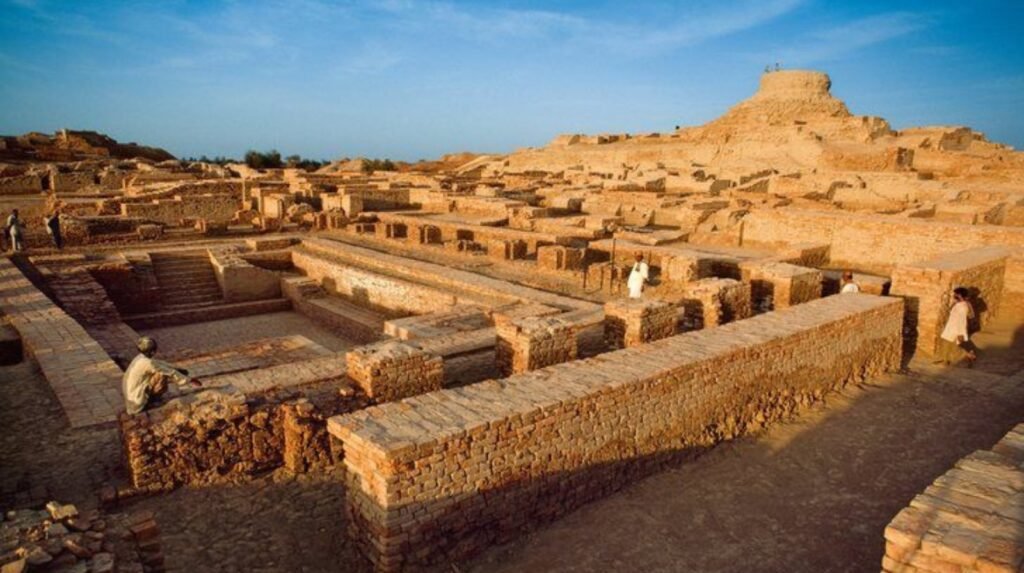
Mohenjo-daro was built around 2500 BCE in what is now Sindh province. It was one of the world’s first planned cities — grid streets, covered drainage, multi-room houses, a Great Bath for public bathing, and evidence of standardized weights and measures. At its peak it had a population of approximately 40,000 people and covered more than 200 hectares.
The Indus Valley Civilization it belonged to was larger than ancient Egypt and Mesopotamia combined at its height. Mohenjo-daro is the best-preserved city of that civilization — which is why it is here, in Pakistan’s Sindh desert. The Dancing Girl, a small bronze figurine found here in 1926, is one of the most recognized artifacts of the ancient world.
Location: Larkana District, Sindh Province — ~400 km from Karachi
Best visited: October–March (avoid May–August — extreme Sindh heat)
Access: Fly Islamabad/Karachi → Sukkur or Mohenjo-daro airstrip · then car
UNESCO status: Inscribed 1980. On List of World Heritage in Danger.
Nearby: Kot Diji Fort (3300 BCE), Sukkur’s tomb of Bibi Jawindi
2. Taxila (Inscribed 1980)
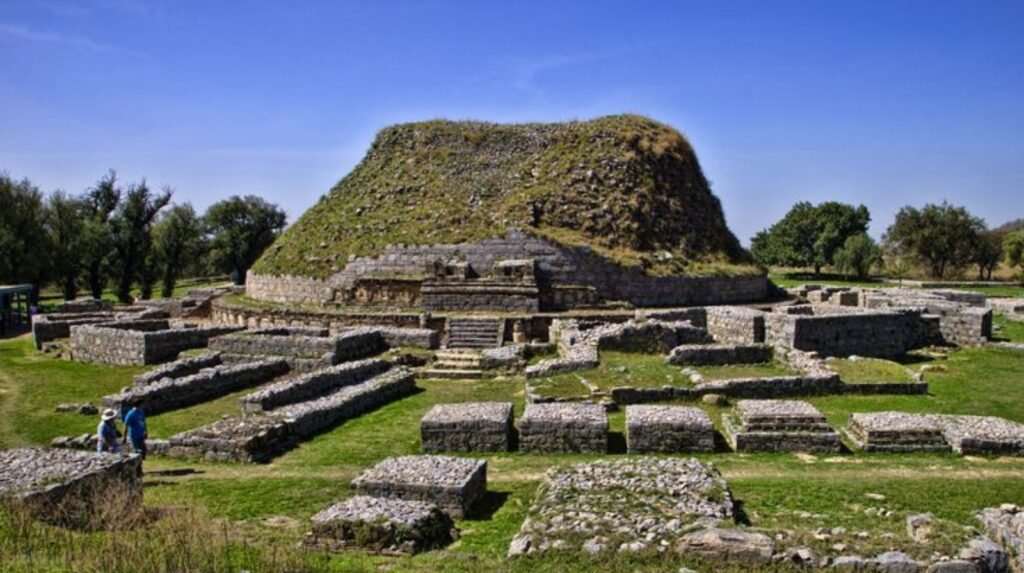
Taxila was a university city before universities had a name for themselves. Located 35 km northwest of Islamabad, it was one of the great centers of learning in the ancient world — students came from China, Central Asia, Greece, and Persia to study medicine, military strategy, law, and philosophy. Alexander the Great arrived in 326 BCE and found a city already centuries old.
The UNESCO site encompasses multiple distinct settlements across different eras — Bhir Mound (Achaemenid/early period), Sirkap (Indo-Greek city built on Hellenistic grid plan), and Sirsukh (Kushan city). Taxila is also the center of Gandhara art — the first artistic tradition to depict the Buddha in human form, blending Greek artistic conventions with Buddhist iconography. The Taxila Museum houses one of the finest collections of Gandhara sculpture in the world.
Location: 35 km northwest of Islamabad — 45-minute drive, excellent day trip
Best visited: October–April
Taxila Museum: Open daily except Monday · Entry nominal fee
Key sites: Dharmarajika Stupa, Sirkap city ruins, Jaulian monastery
Half-day from Islamabad: Drive, 2 hours at museum, 2 hours at ruins, return
3. Buddhist Ruins of Takht-i-Bahi (Inscribed 1980)
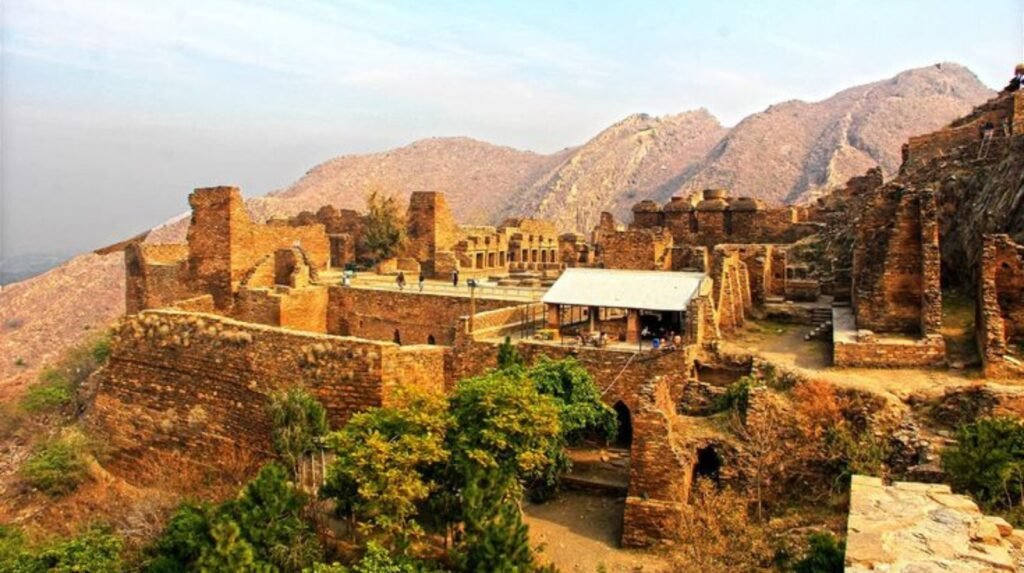
Built in the 1st century CE during the Kushan Empire, Takht-i-Bahi (‘Throne of the Spring’) is one of the best-preserved Buddhist monastic complexes in South Asia. Its hilltop location in Khyber Pakhtunkhwa — elevated above the surrounding plains — protected it from the invasions that destroyed most comparable sites. Meditation chambers, stupas, courtyard halls, and monastic quarters survive in remarkable condition. For travelers interested in the spread of Buddhism and Gandhara art, Takht-i-Bahi is extraordinary. It is one hour from Peshawar and can be combined with a Peshawar city visit for a single day itinerary.
4. Lahore Fort and Shalimar Gardens (Inscribed 1981)
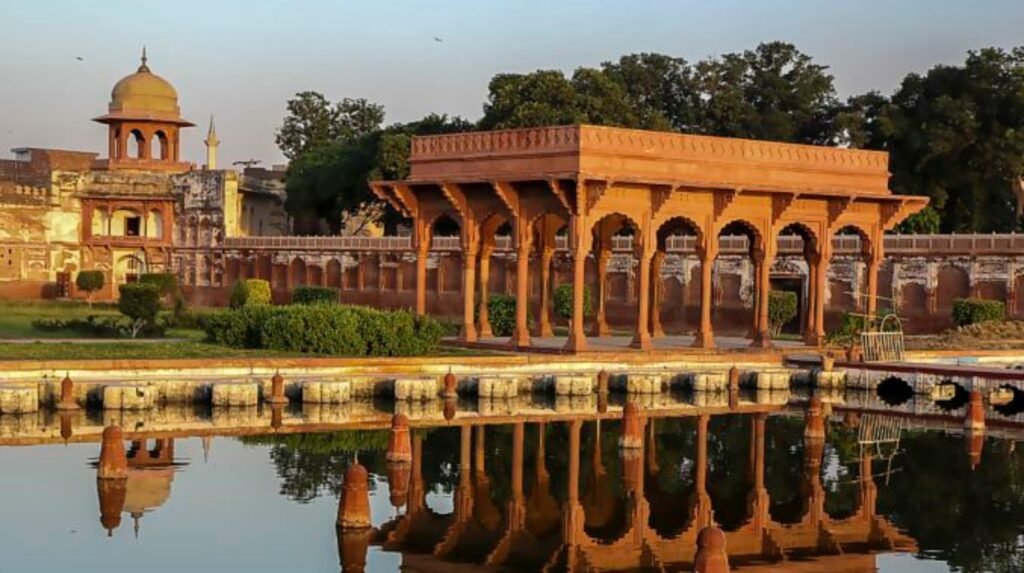
Lahore Fort — known locally as Shahi Qila (Royal Fort) — is the crown of Mughal architecture in Pakistan. Its foundations were laid in 1566 under Emperor Akbar; additions followed under Jahangir, Shah Jahan, and Aurangzeb, creating a palimpsest of Mughal imperial ambition across three centuries. The Sheesh Mahal (Mirror Palace), the Naulakha Pavilion, the Alamgiri Gate, and the Moti Masjid (Pearl Mosque) are among the 21 monuments inside.
The Shalimar Gardens, two kilometers from the fort, were laid out by Shah Jahan in 1641 — the same emperor who built the Taj Mahal. Three terraced gardens with a central axis of water channels, fountains (410 of them), and marble pavilions represent the Mughal concept of paradise made architectural. The scale and craft of both sites rival anything in Mughal India — and receive a fraction of the visitors.
Location: Walled City of Lahore · Central Lahore
Opening: Daily 8am–6pm · Entry fee approx PKR 500 (foreigners)
Best visited: October–March (avoid May–August heat)
Combine with: Badshahi Mosque (directly opposite Lahore Fort’s Alamgiri Gate)
Nearby: Walled City tours, Wazir Khan Mosque, Gawalmandi food street
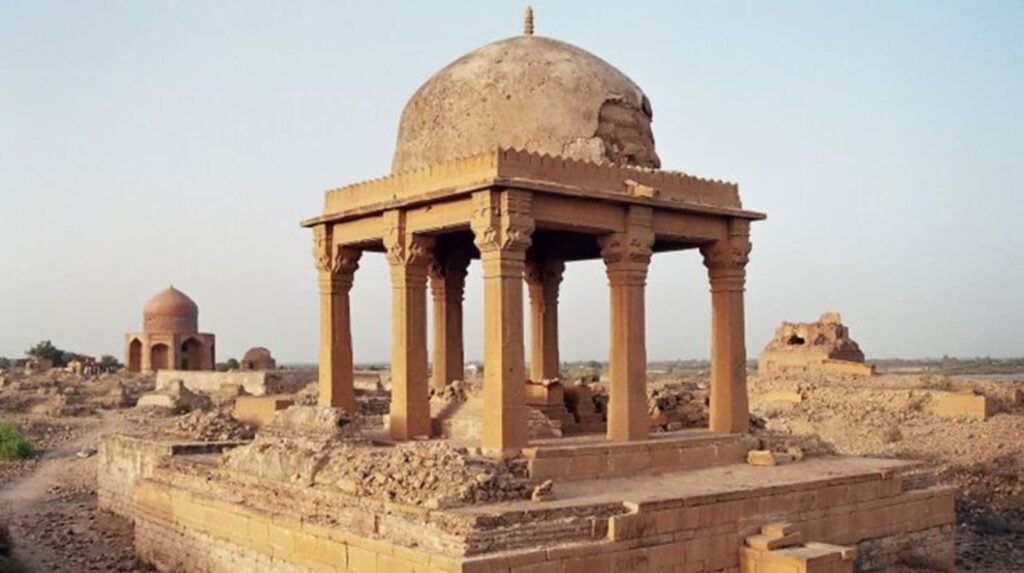
5. Historical Monuments at Makli, Thatta (Inscribed 1981)
Makli is one of the largest necropolises in the world — a cemetery covering 10 square kilometers outside the ancient city of Thatta in Sindh. The tombs span the 14th to 18th centuries and represent a convergence of Persian, Central Asian, and local Sindhi architectural traditions. The carved stonework on individual tombs is intricate to a degree that rivals any comparable Islamic funerary architecture in the world. Makli is undervisited by international travelers — partly due to Sindh’s summer heat, partly due to its distance from Pakistan’s main tourist corridor. For heritage travelers who make the journey (best combined with Mohenjo-daro), it is extraordinary in its scale and craftsmanship.
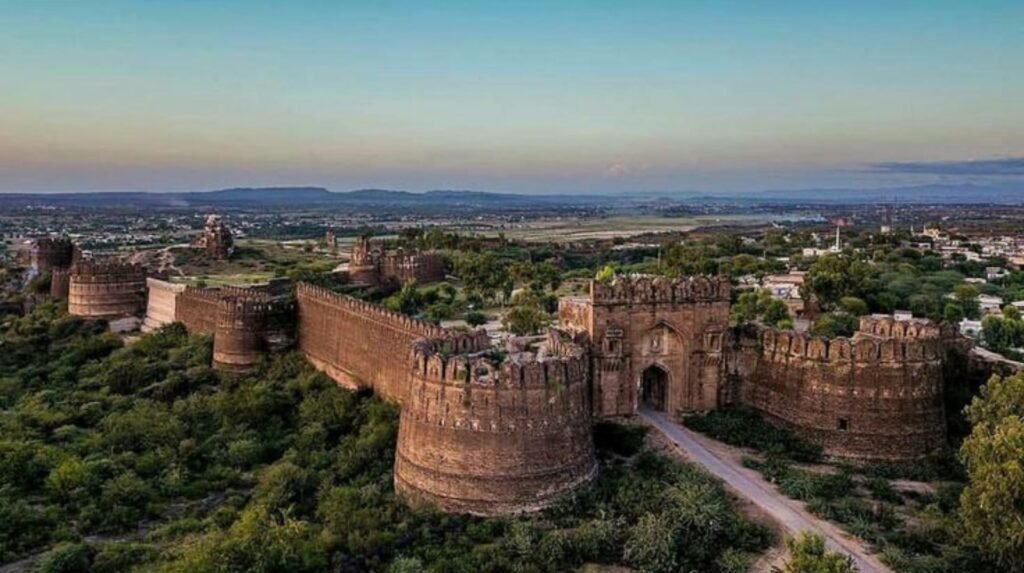
6. Rohtas Fort (Inscribed 1997)
Built between 1541 and 1543 by Sher Shah Suri — the Afghan ruler who briefly displaced the Mughal emperor Humayun — Rohtas Fort was designed as a military fortification to control the Punjab region. It covers 4 square kilometers with 12 massive gates and walls ranging from 10 to 18 meters high. It was built in fewer than 8 years, which makes the quality of its construction remarkable. Located near Jhelum in Punjab, it is a 3-hour drive from Lahore.
Beyond UNESCO: The Wider Cultural Heritage
Lahore’s Walled City
The Walled City of Lahore is one of Asia’s great living heritage cities — Mughal, Sikh, and colonial architecture layered across 300 hectares with a population of approximately 200,000 people still living inside the original walls. The Badshahi Mosque (completed 1673, commissioned by Aurangzeb) held the title of the world’s largest mosque for over three centuries. The Wazir Khan Mosque, built in 1641, is considered the finest example of Mughal tilework in Pakistan. The Walled City does not feel like a museum — it is a functioning, chaotic, extraordinary city within a city. Read our full guide: Chauburji Chowk Lahore.
The Gandhara Trail
The Gandhara civilization flourished in modern-day Khyber Pakhtunkhwa and Punjab from roughly 1st to 7th centuries CE. Its artistic legacy — the first human depictions of the Buddha in Hellenistic style — spread from here to China, Japan, Korea, and Southeast Asia. Museums in Peshawar, Taxila, Swat, and the National Museum in Karachi hold collections of Gandhara sculpture that would command international attention in any other country.
The Sufi Heritage
Pakistan’s Islamic heritage is deeply shaped by Sufism — the mystical dimension of Islam that spread through the subcontinent via wandering saints whose shrines became centers of devotion, music, and community life. The Data Darbar shrine in Lahore (Data Ganj Bakhsh, 11th century) is the largest Sufi shrine in South Asia. The annual Urs celebrations at major shrines are among the most vivid cultural experiences available to visitors anywhere in Asia — qawwali music through the night, devotees in spiritual devotion, and a social dimension that crosses ethnic and economic lines.
Planning a Cultural Heritage Itinerary — Sample Routes
5 Days — Lahore Heritage Focus
| Day | Plan |
|---|---|
| Day 1 | Arrive Lahore. Walled City walking tour — Wazir Khan Mosque, Delhi Gate, bazaars. |
| Day 2 | Lahore Fort, Sheesh Mahal, Shalimar Gardens. |
| Day 3 | Badshahi Mosque, Minar-e-Pakistan, Lahore Museum (Gandhara collection). |
| Day 4 | Day trip to Rohtas Fort (3 hrs each way) or Harappa archaeological site. |
| Day 5 | Gawalmandi food street, Wagah Border ceremony (sunset flag-lowering), departure. |
10 Days — Pakistan Heritage Circuit
| Days | Plan |
|---|---|
| Days 1–2 | Karachi — National Museum (largest Gandhara collection), Clifton, Manora Island. |
| Day 3 | Fly Karachi → Mohenjo-daro airstrip. Full day at UNESCO site. Overnight Larkana. |
| Day 4 | Drive Larkana → Sukkur. Makli/Thatta day trip. Overnight Sukkur. |
| Day 5 | Fly Sukkur → Islamabad. Afternoon Taxila. |
| Day 6 | Islamabad — Lok Virsa Museum, Faisal Mosque, Margalla Hills hike. |
| Days 7–9 | Lahore — Walled City, Lahore Fort, Shalimar Gardens, Rohtas Fort day trip. |
| Day 10 | Departure or connect north for mountain extension via Gilgit-Baltistan. |
FAQs — Pakistan Cultural Heritage
The Indus Valley Civilization built Mohenjo-daro 4,500 years ago. Alexander the Great stopped at Taxila 2,350 years ago. The Mughal emperors built Lahore Fort 460 years ago. Pakistan did not inherit this history from somewhere else. It grew up on top of it.
Before you travel, make sure you have applied for your Pakistan Tourist eVisa and explored our Complete Pakistan Travel Guide 2026.
Explore Pakistan’s History — Plan Your Trip with TrulyPakistan